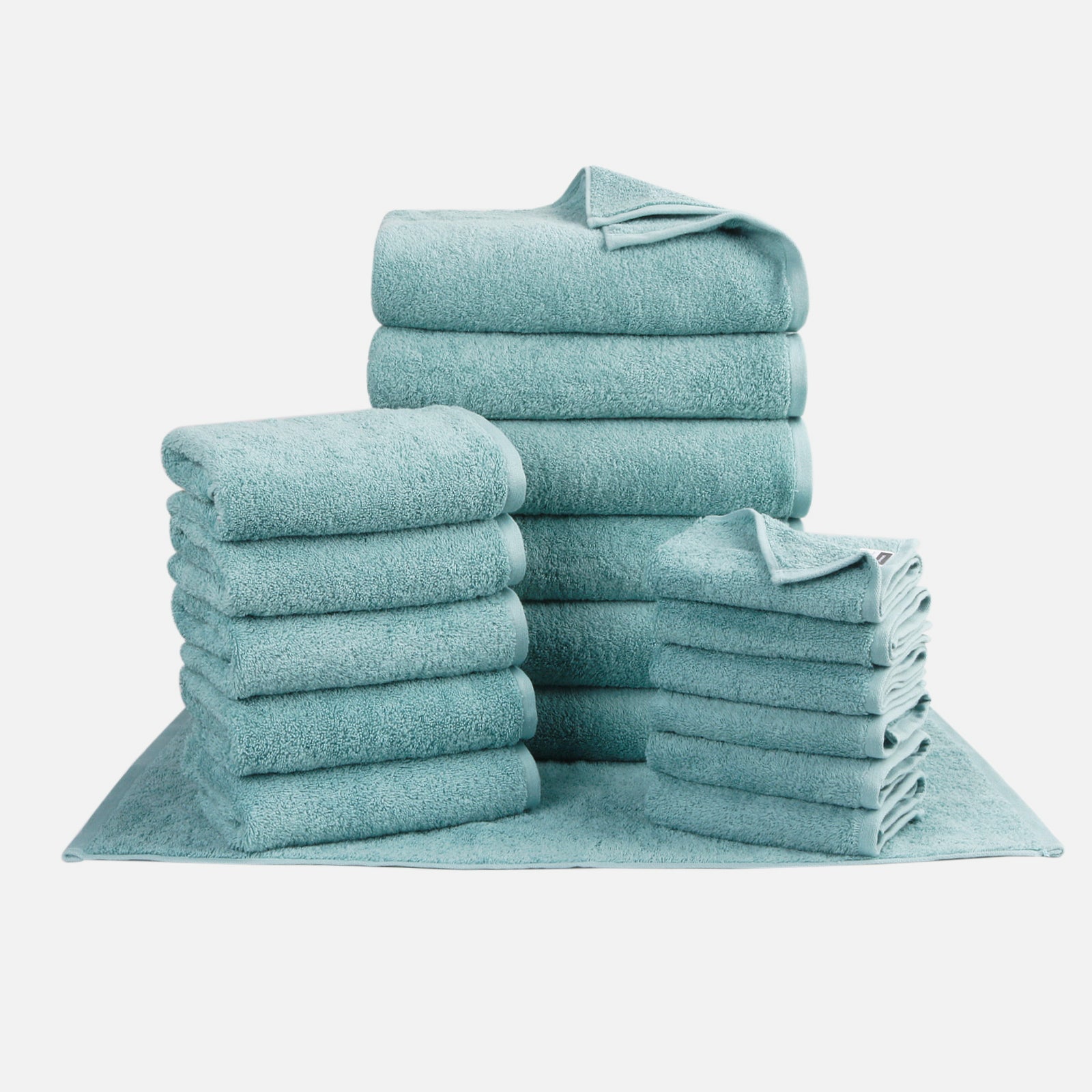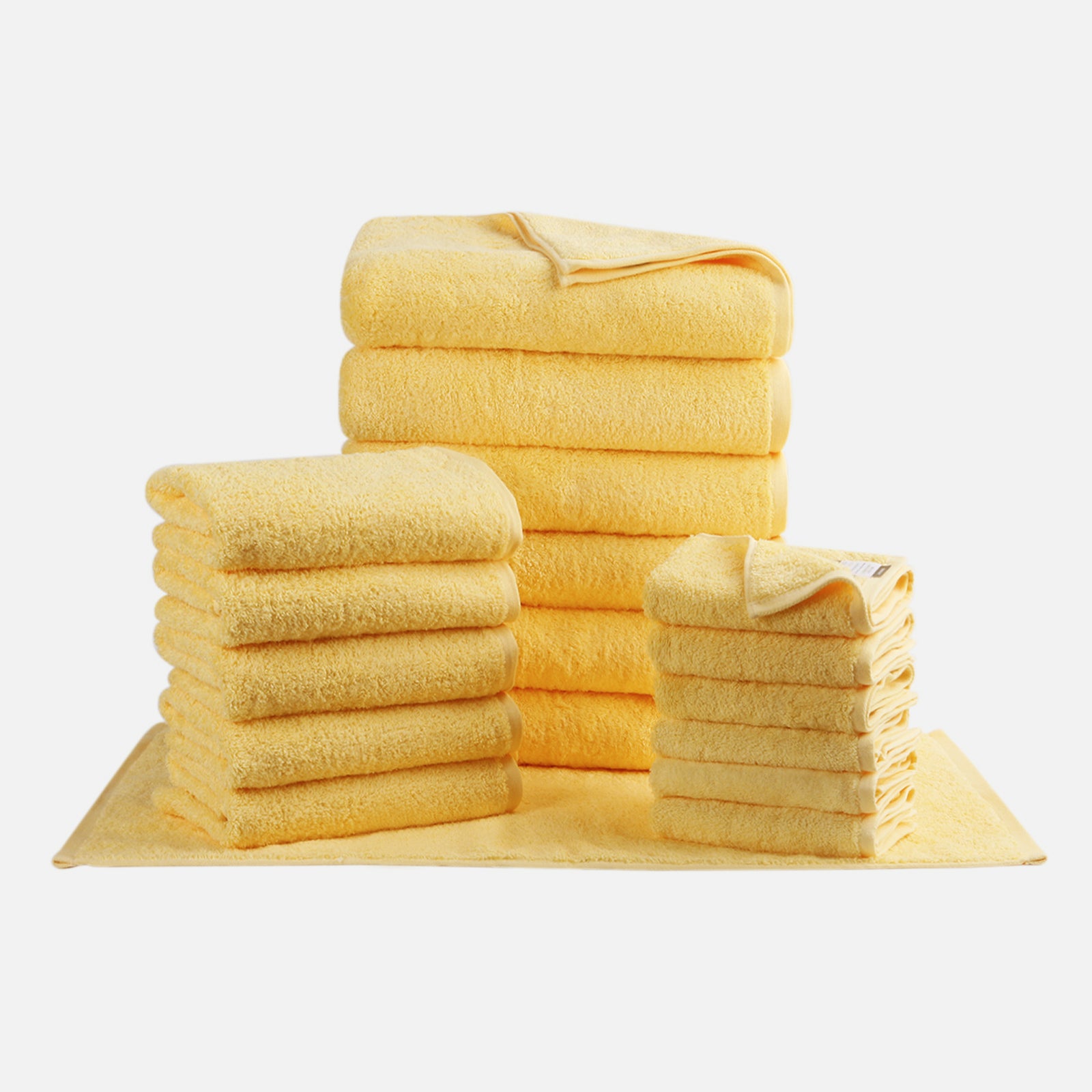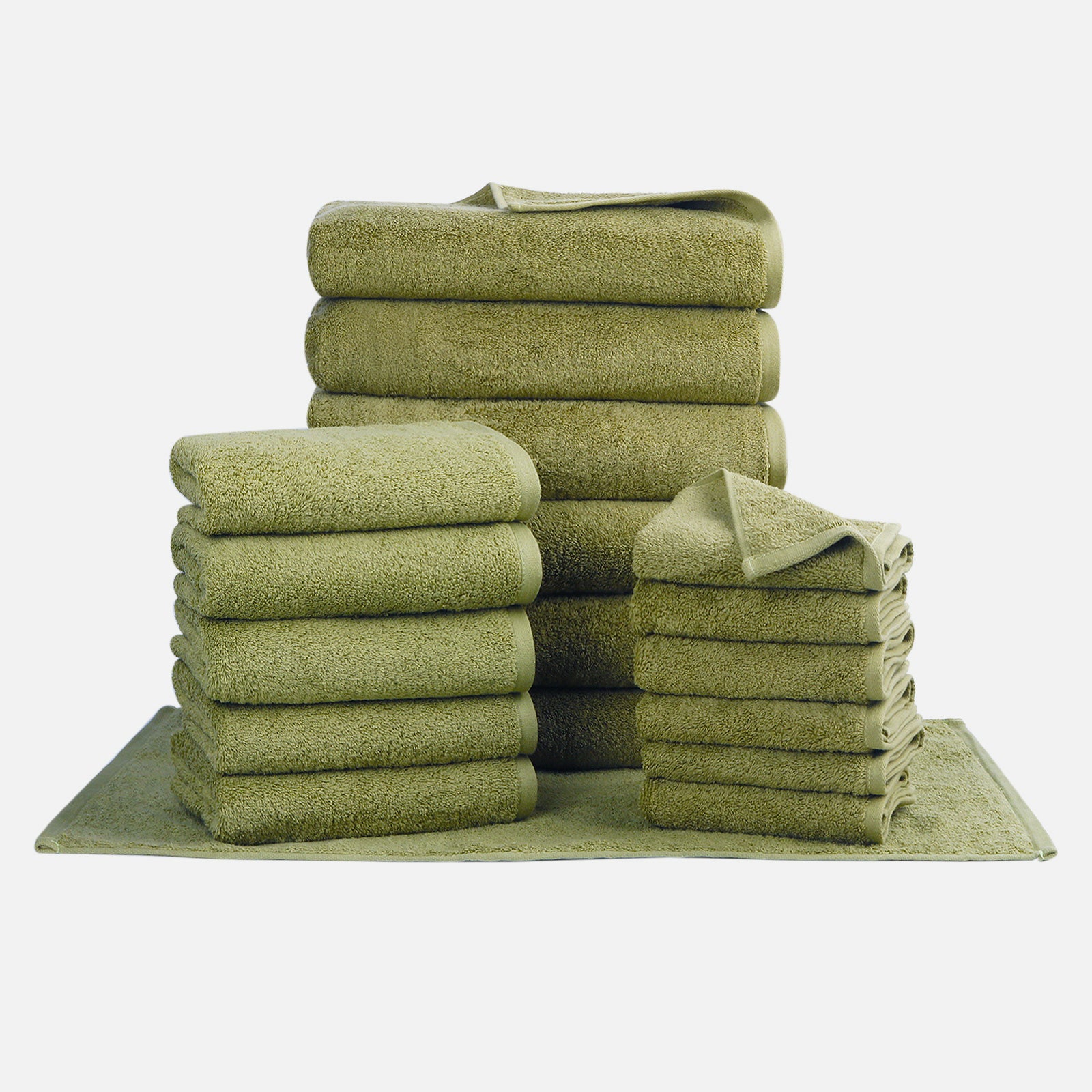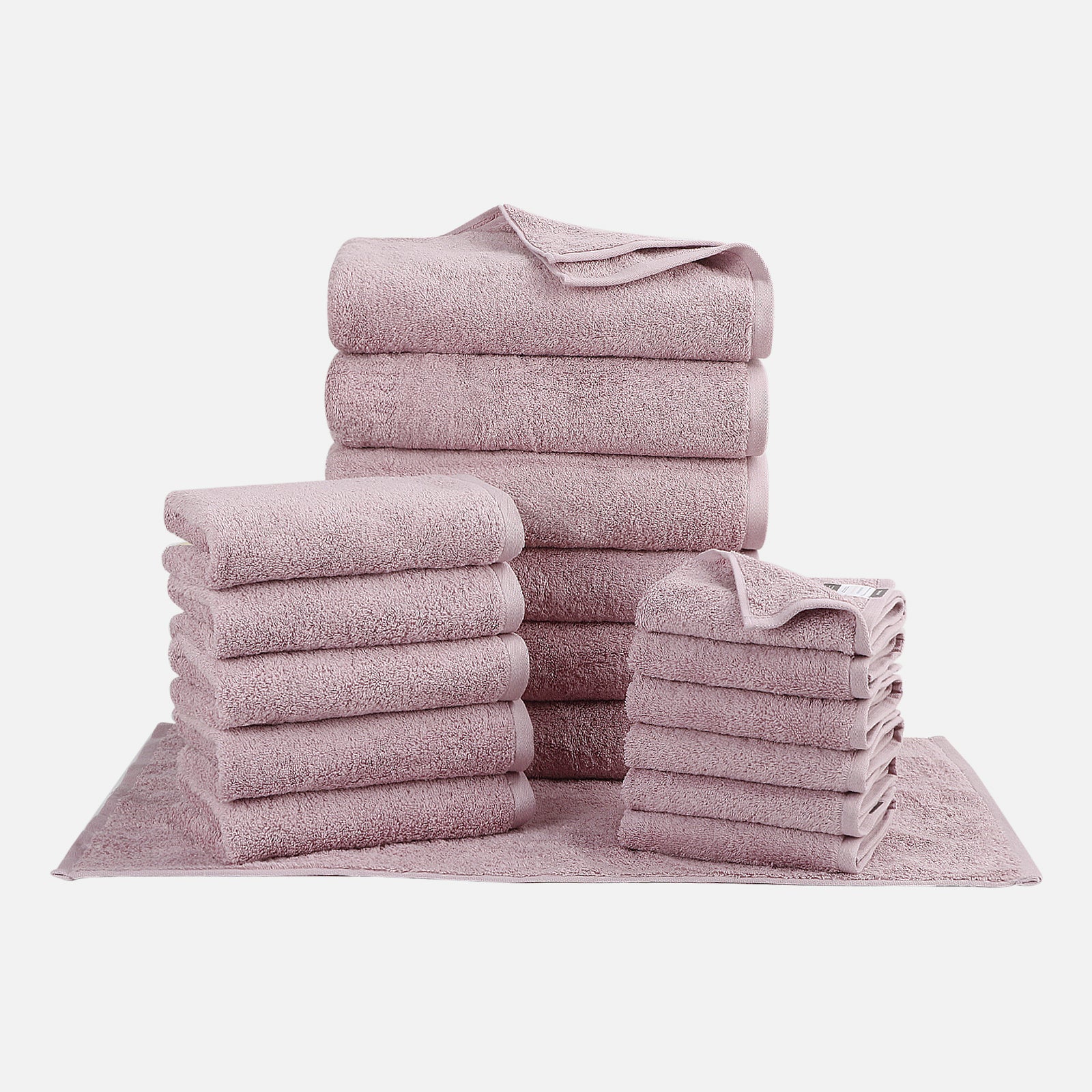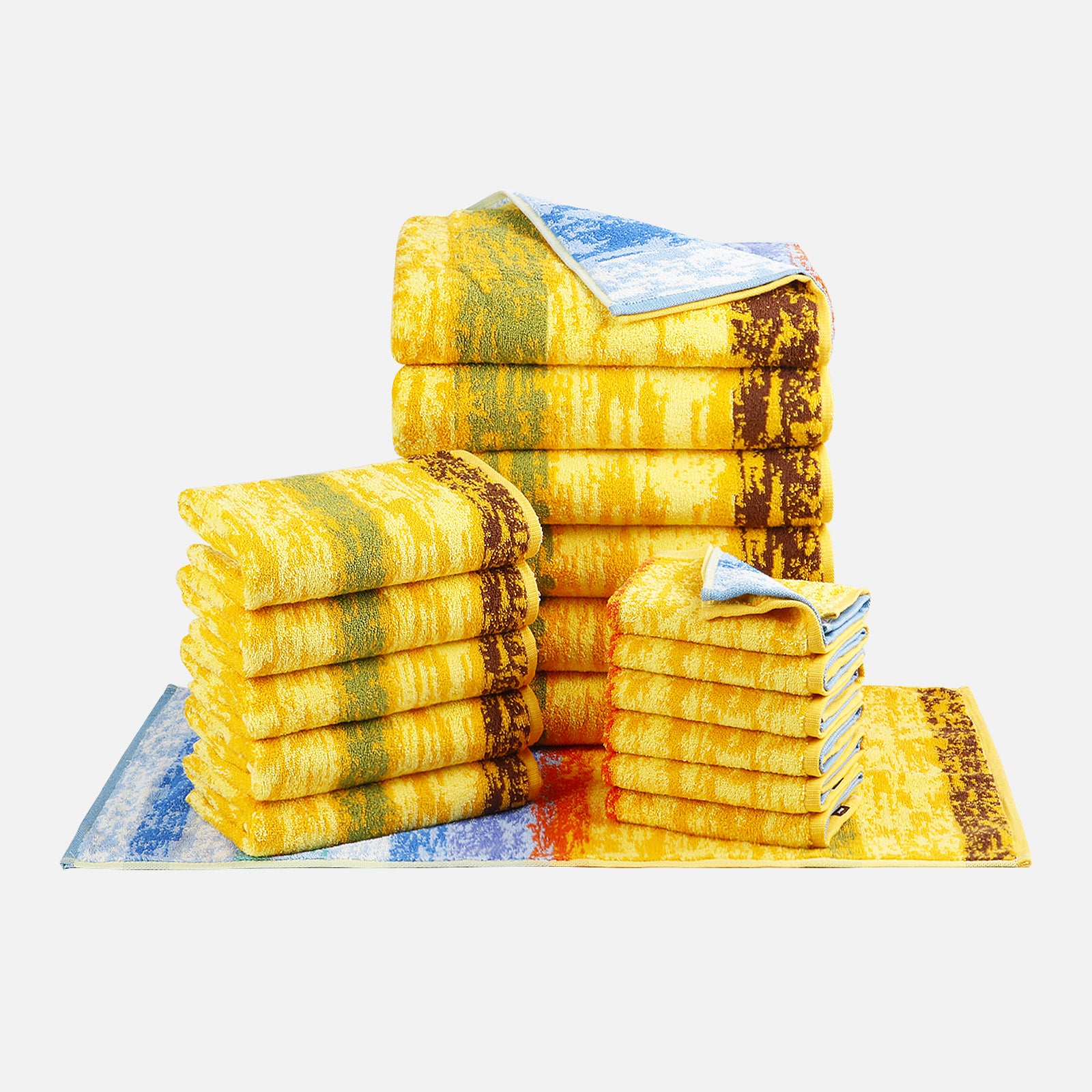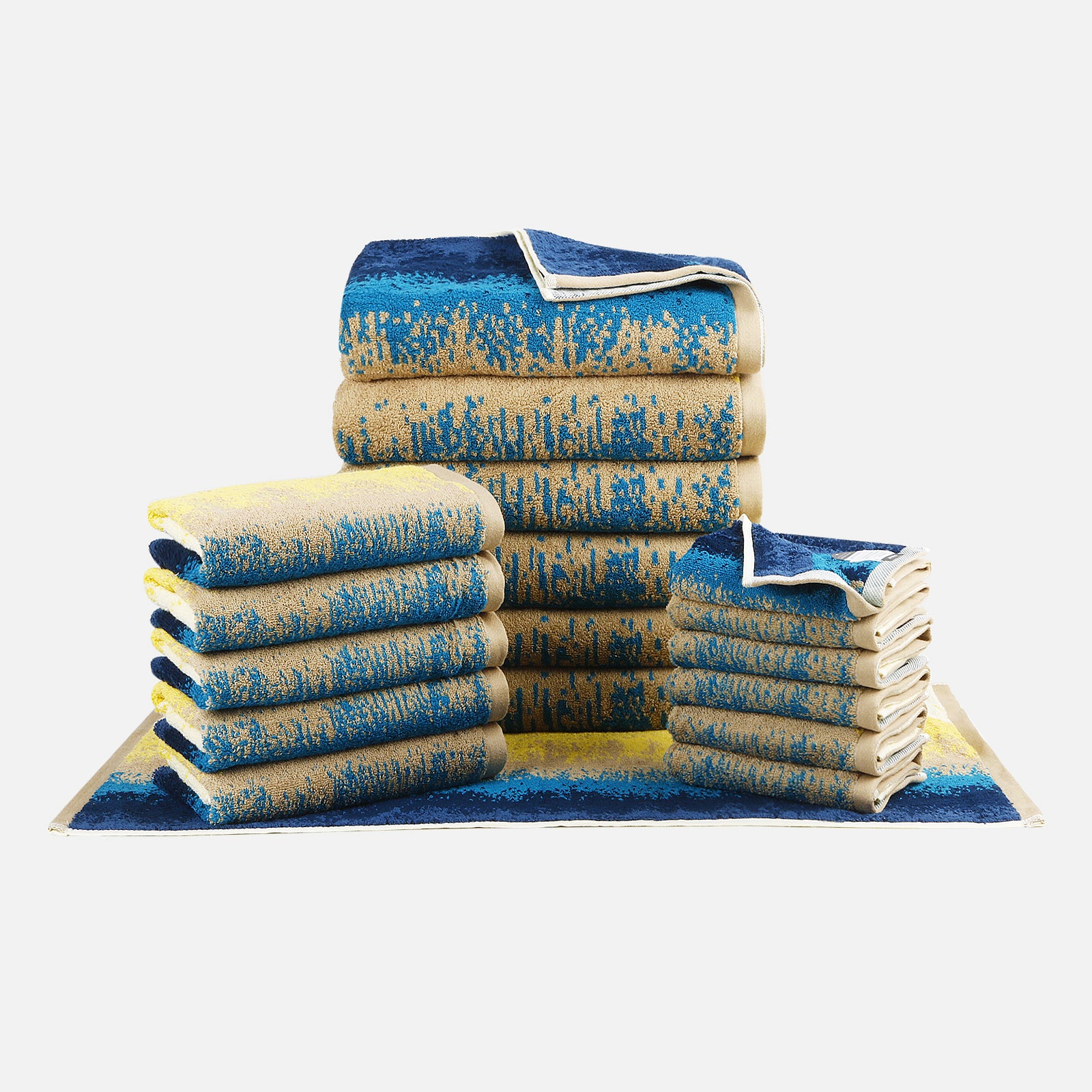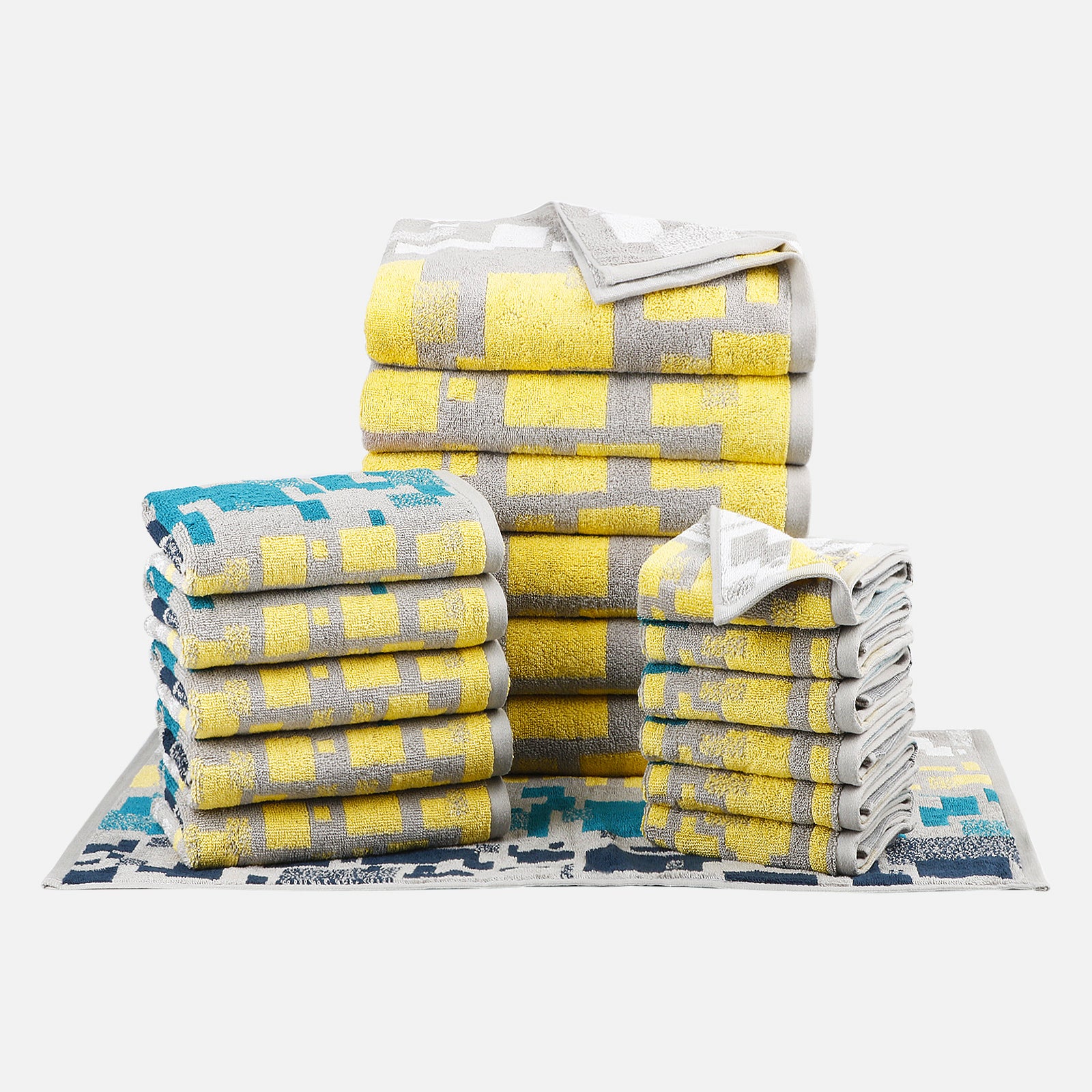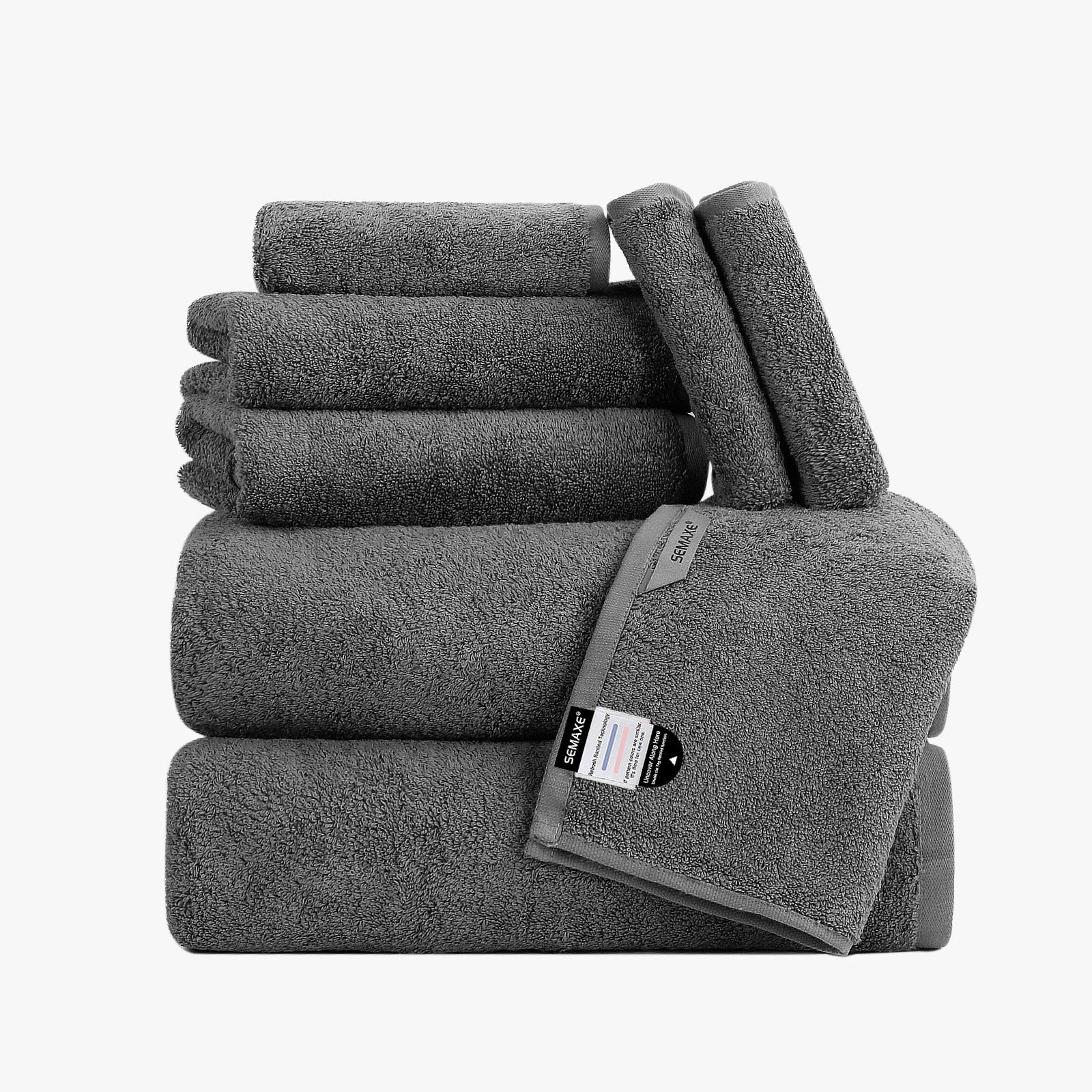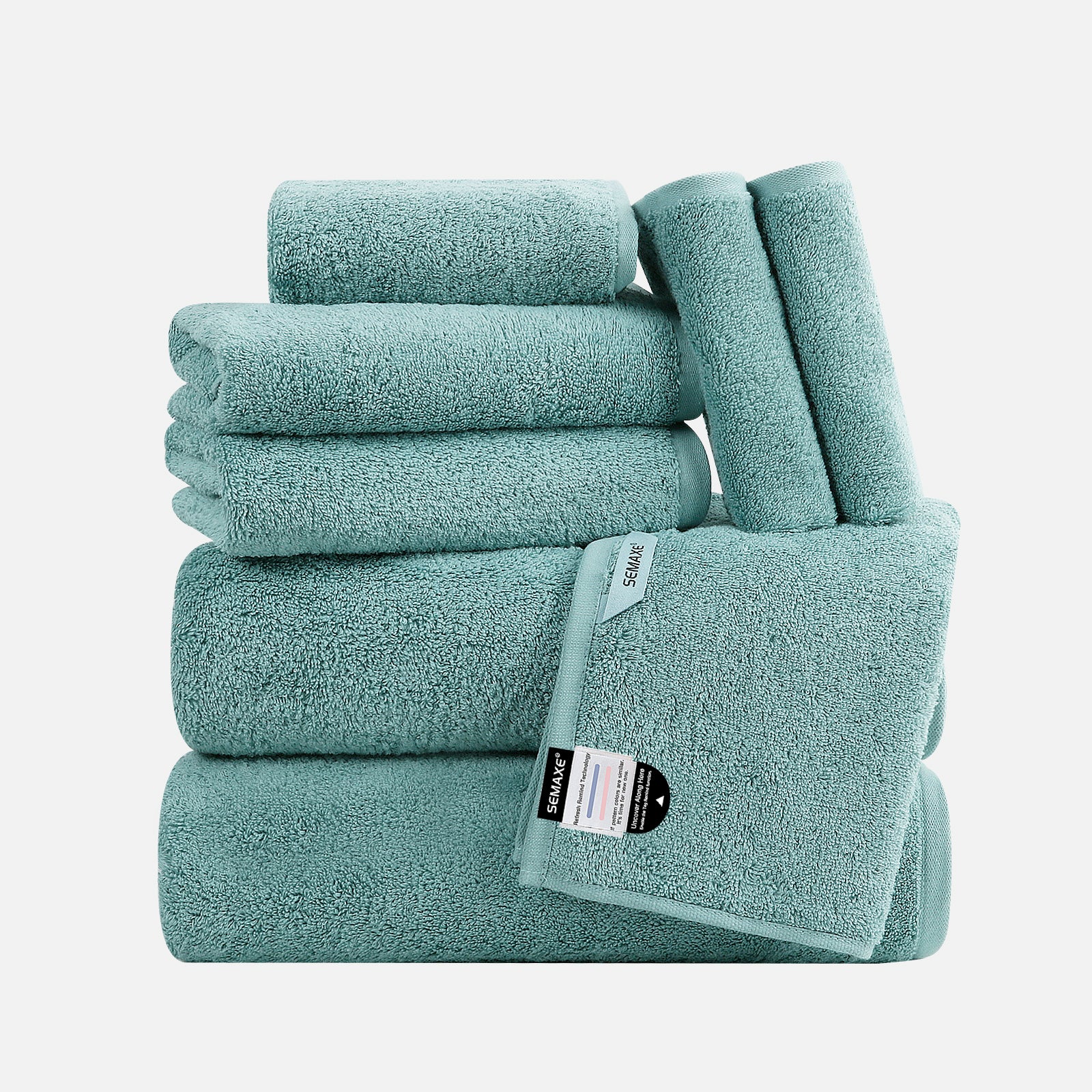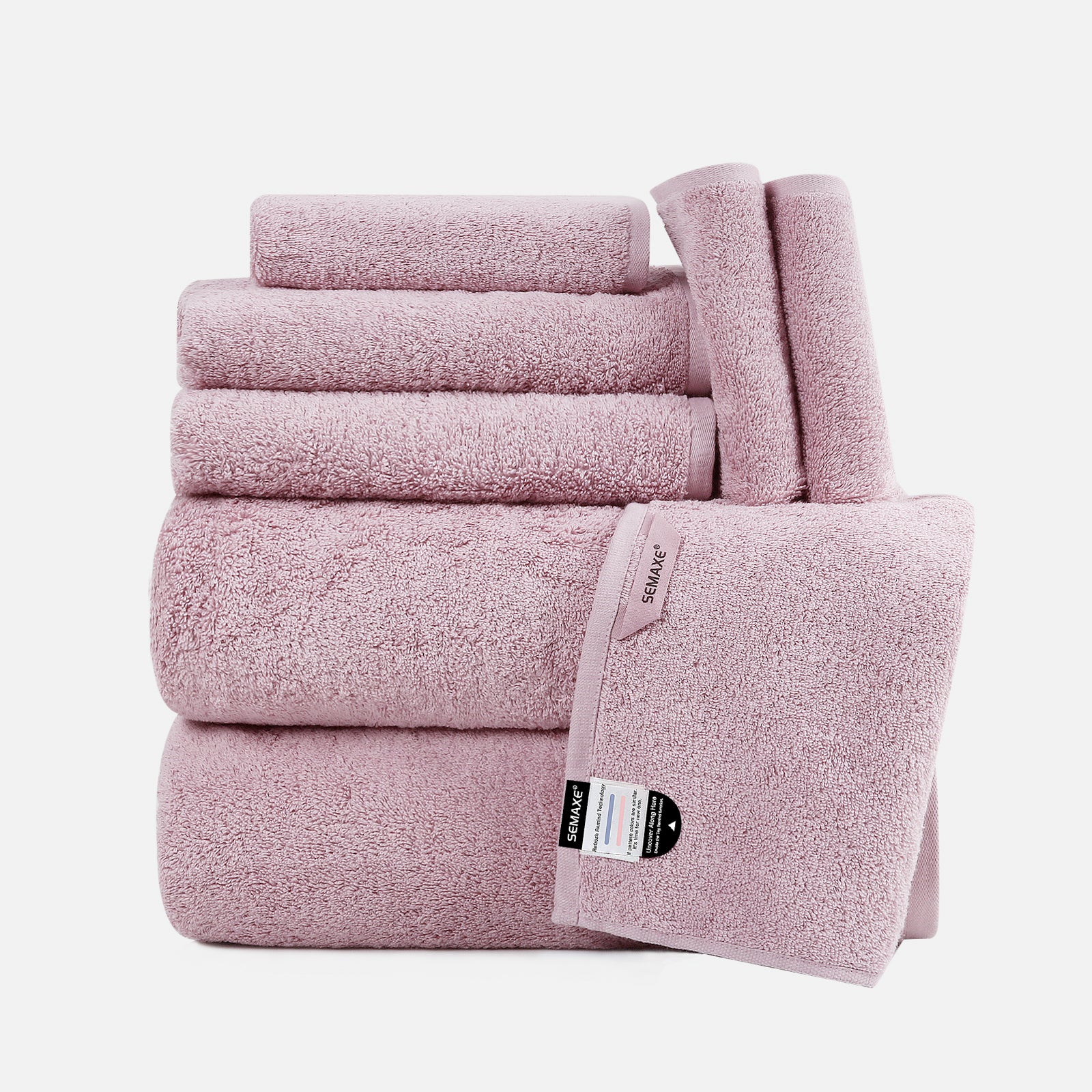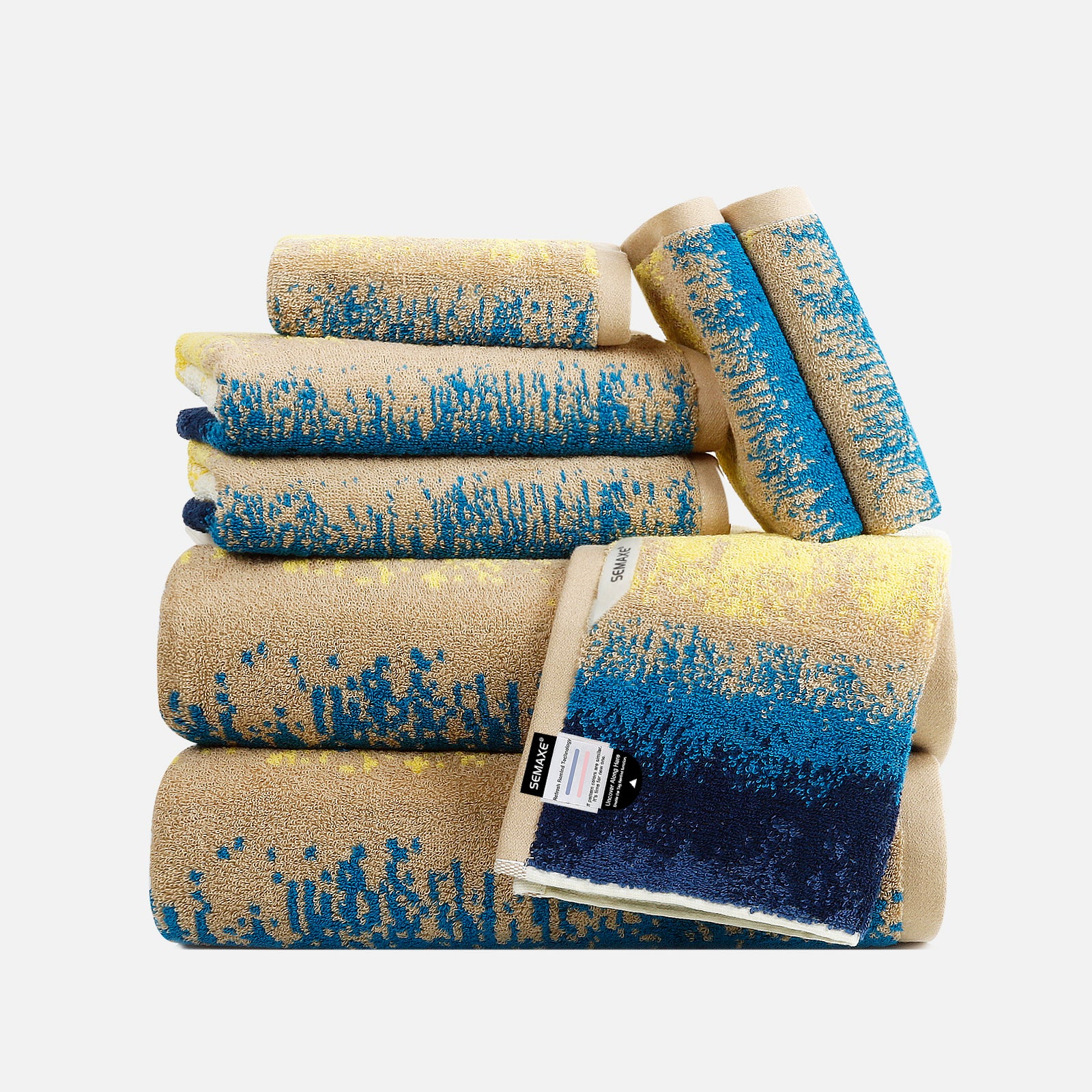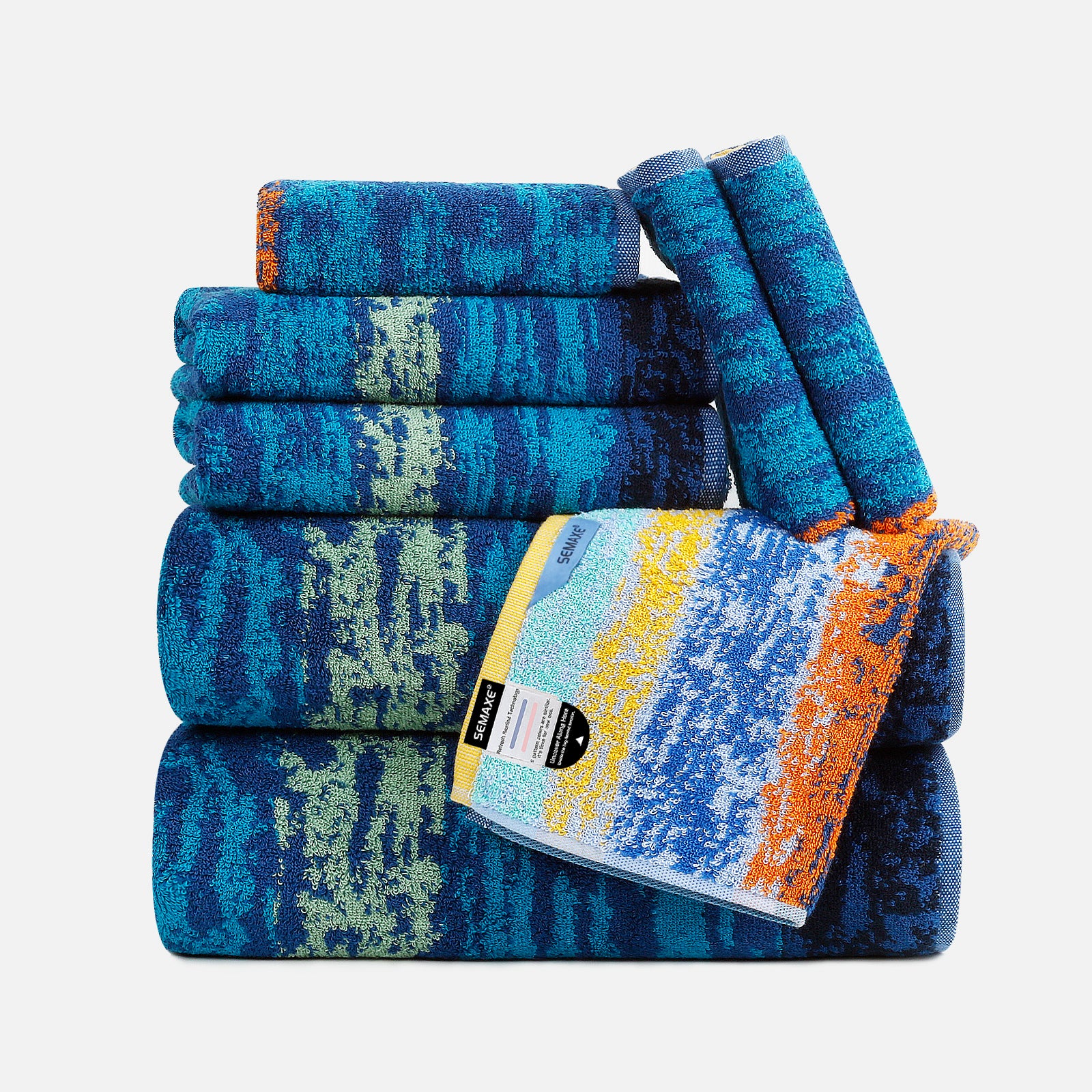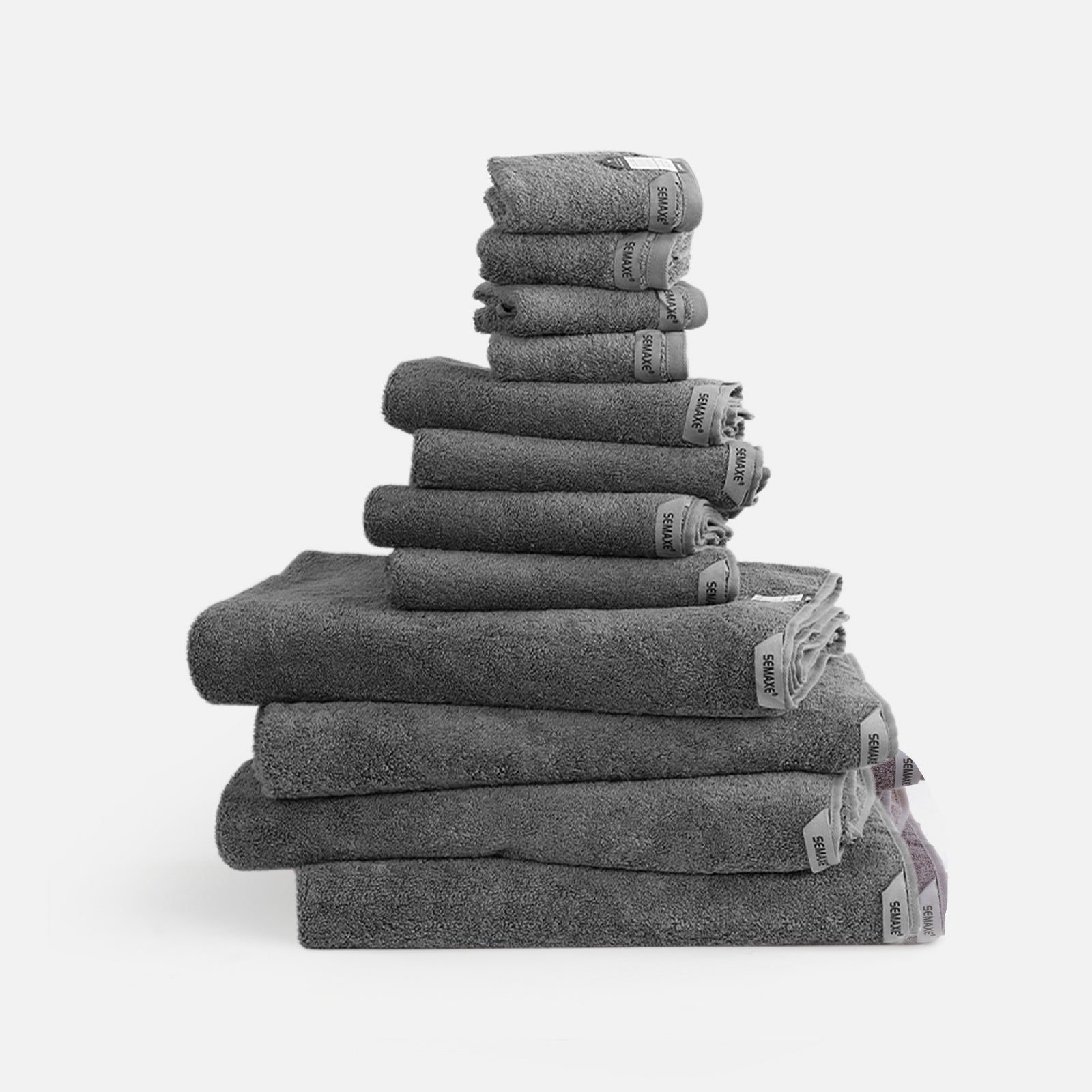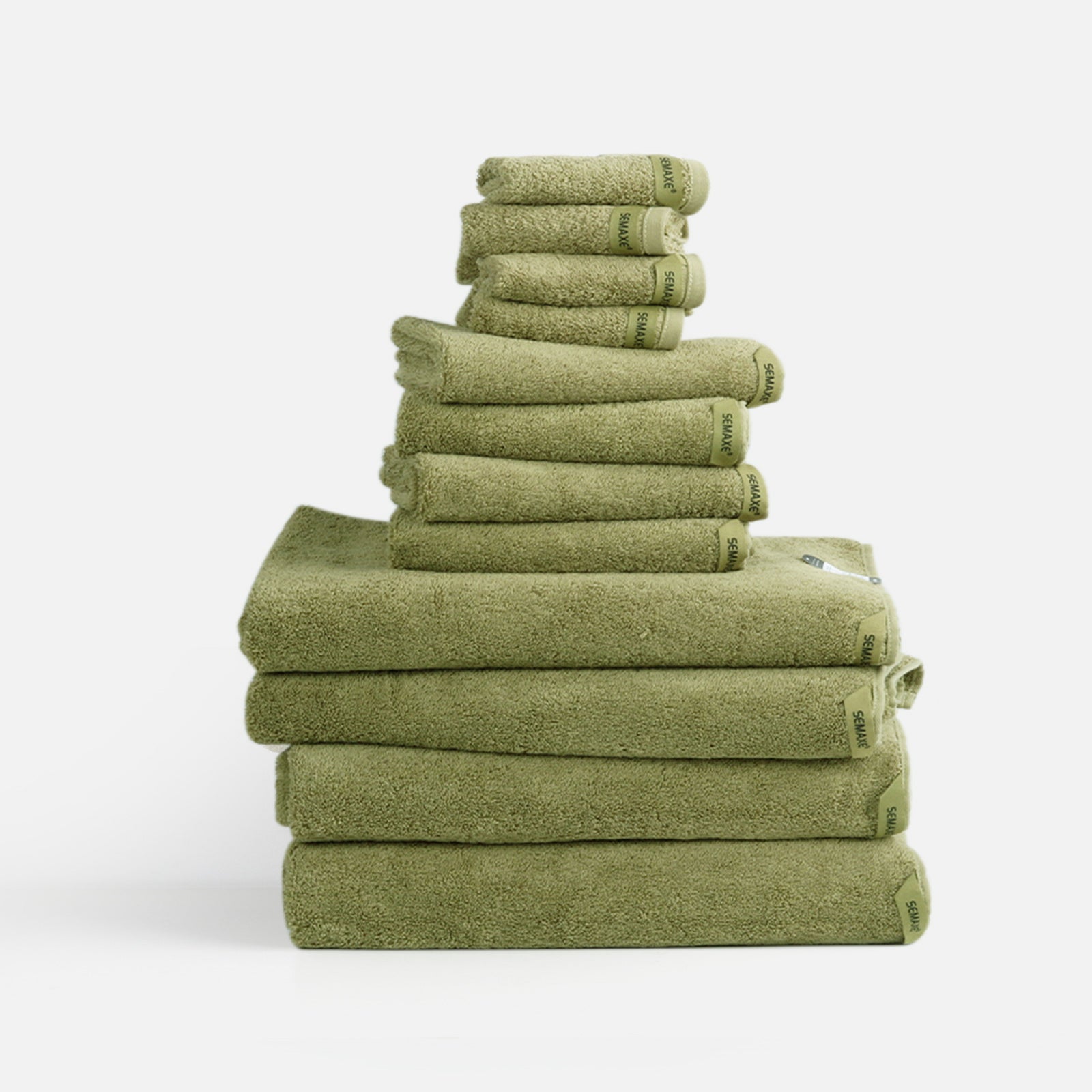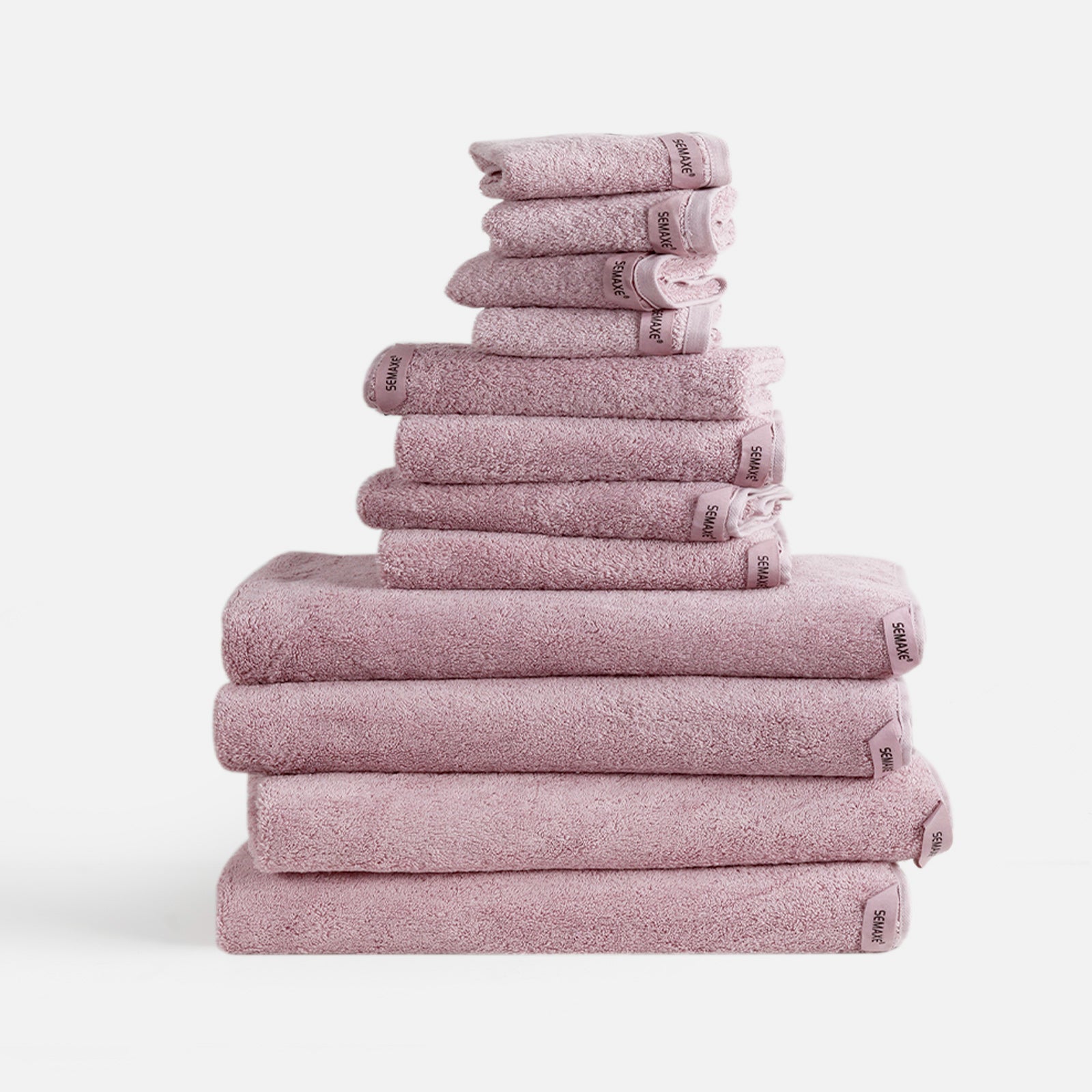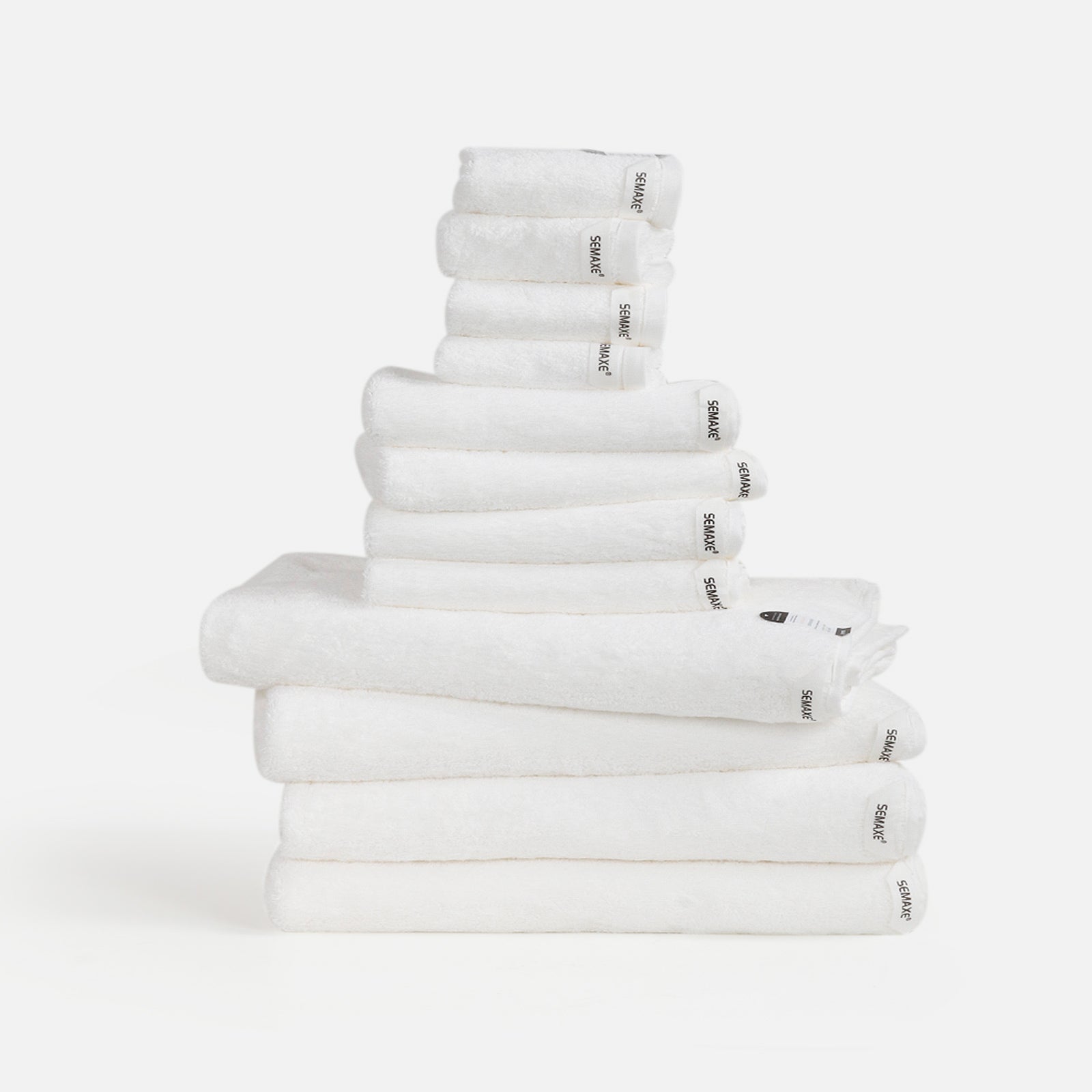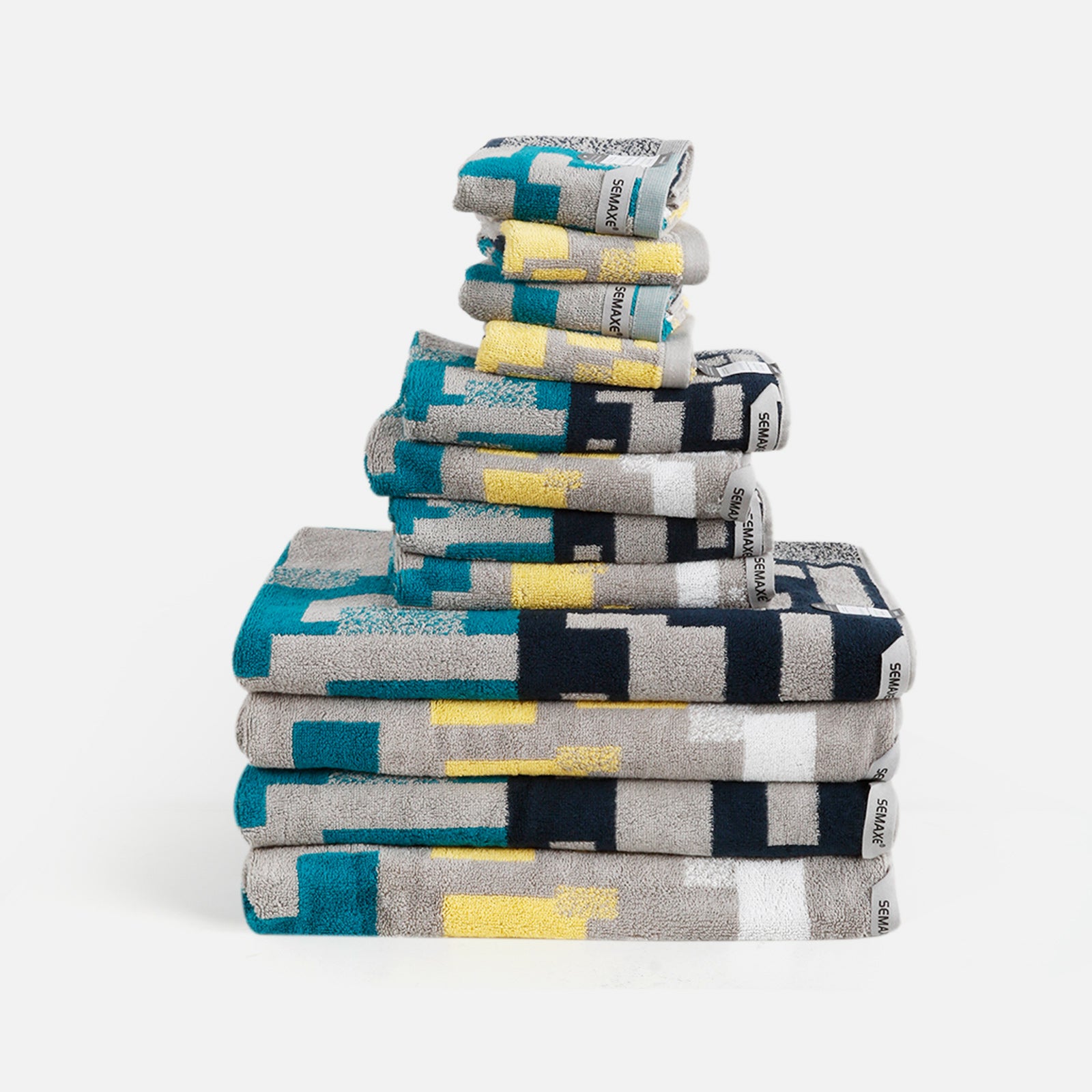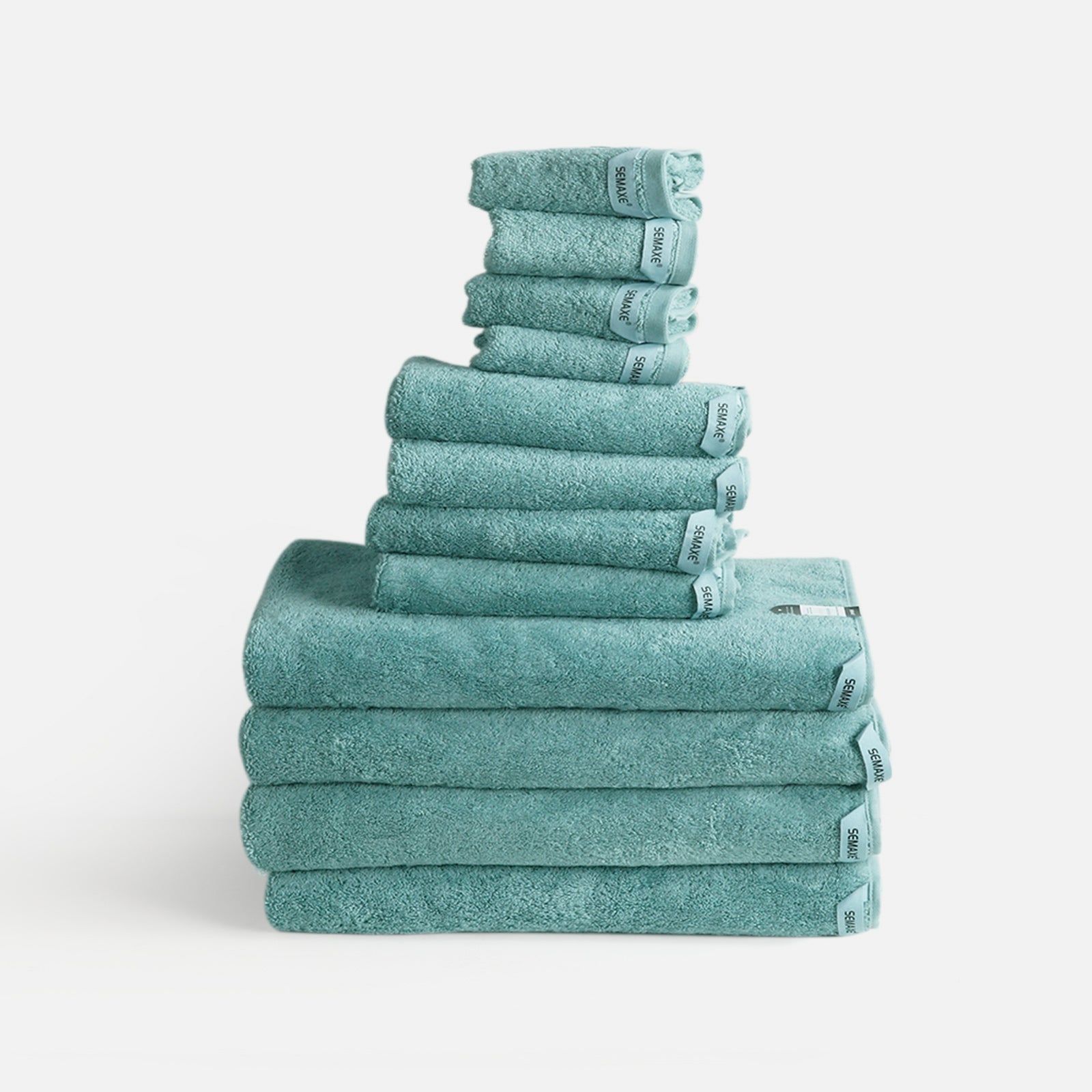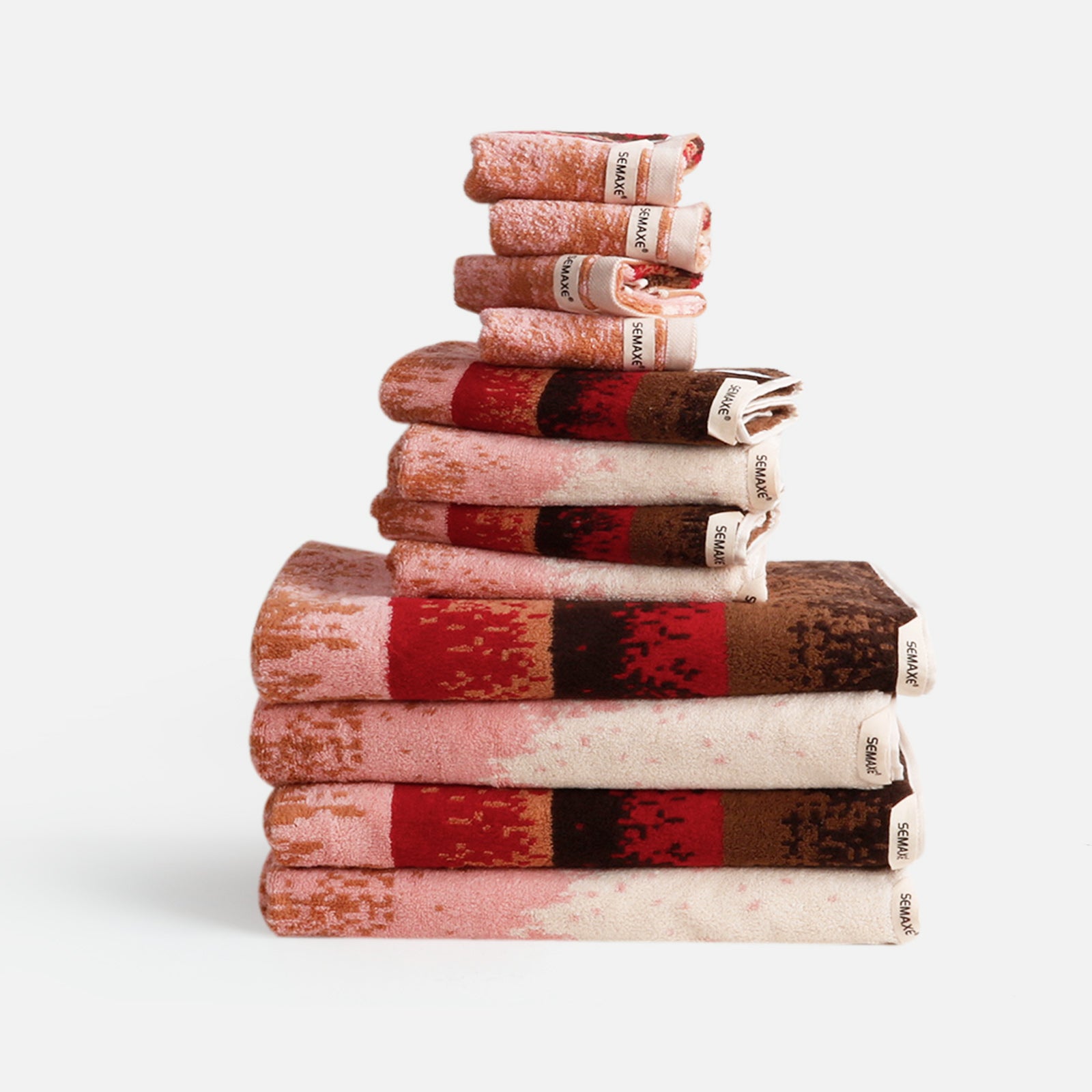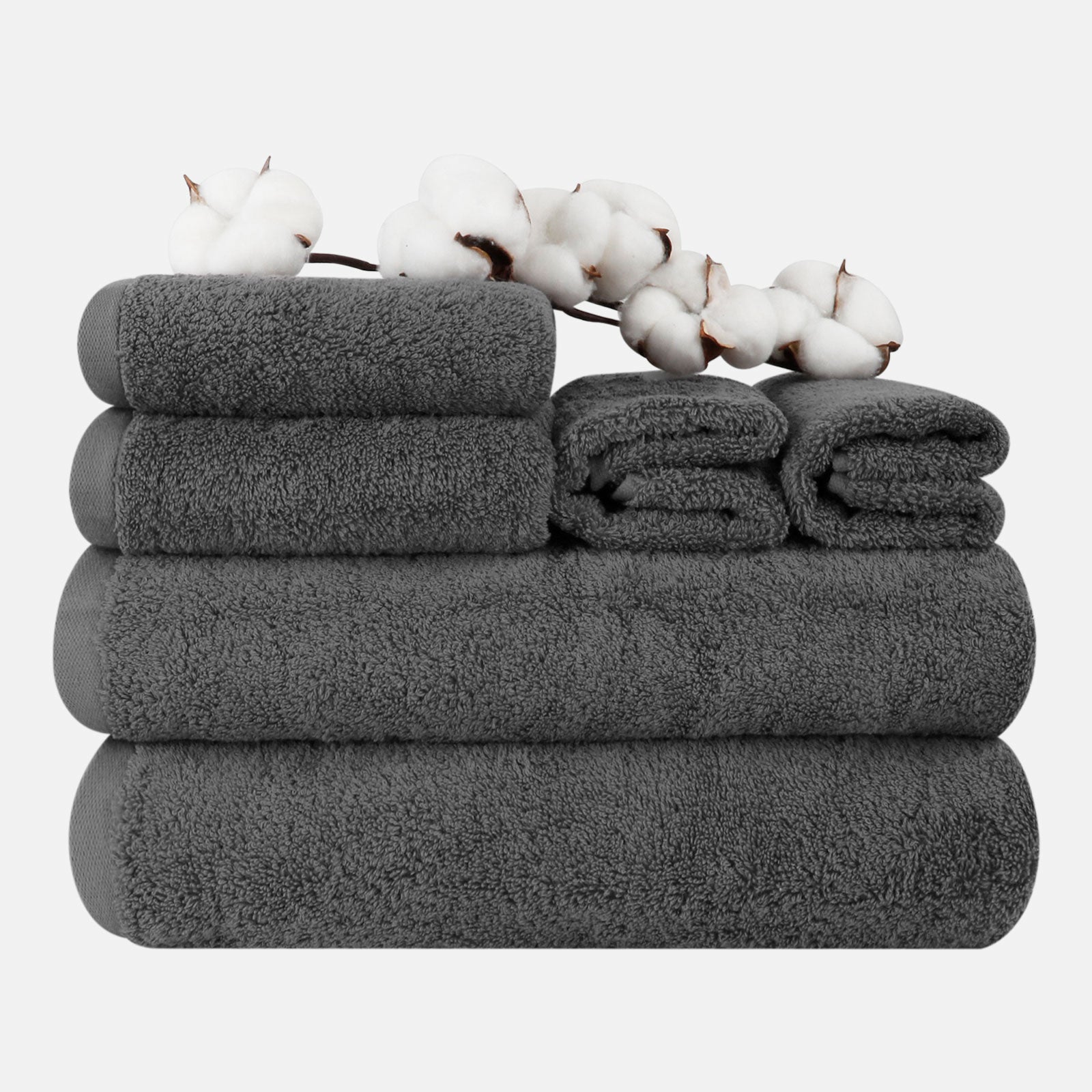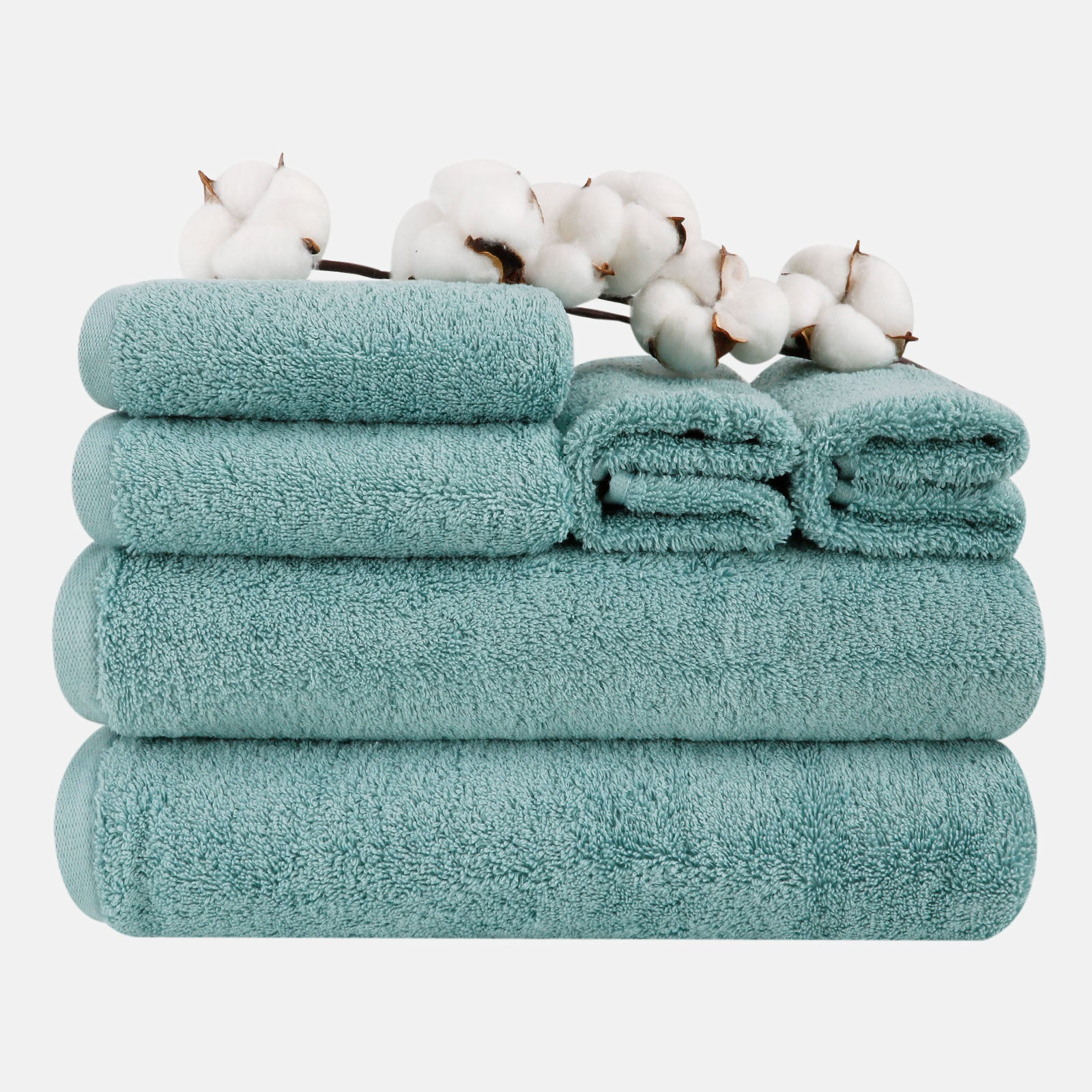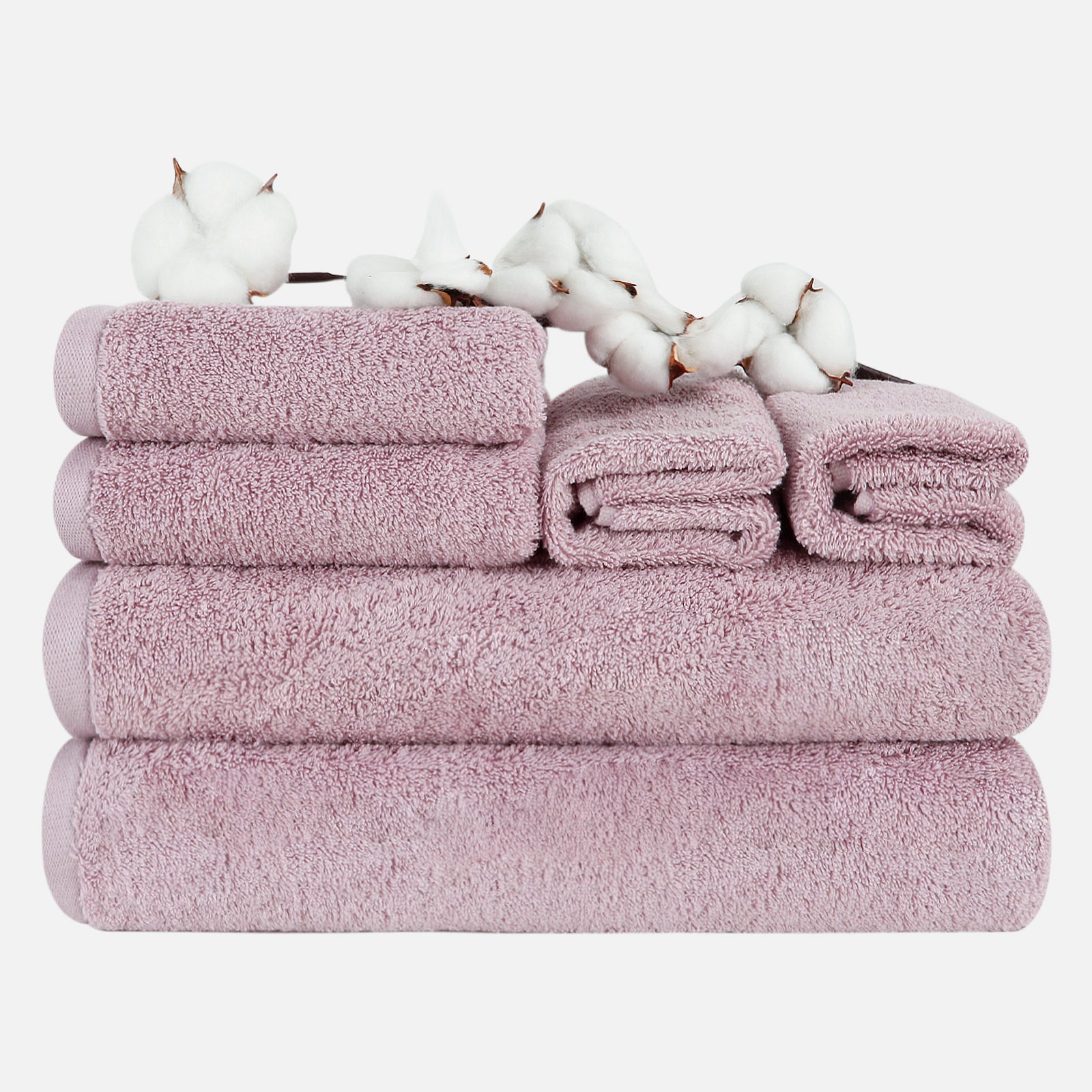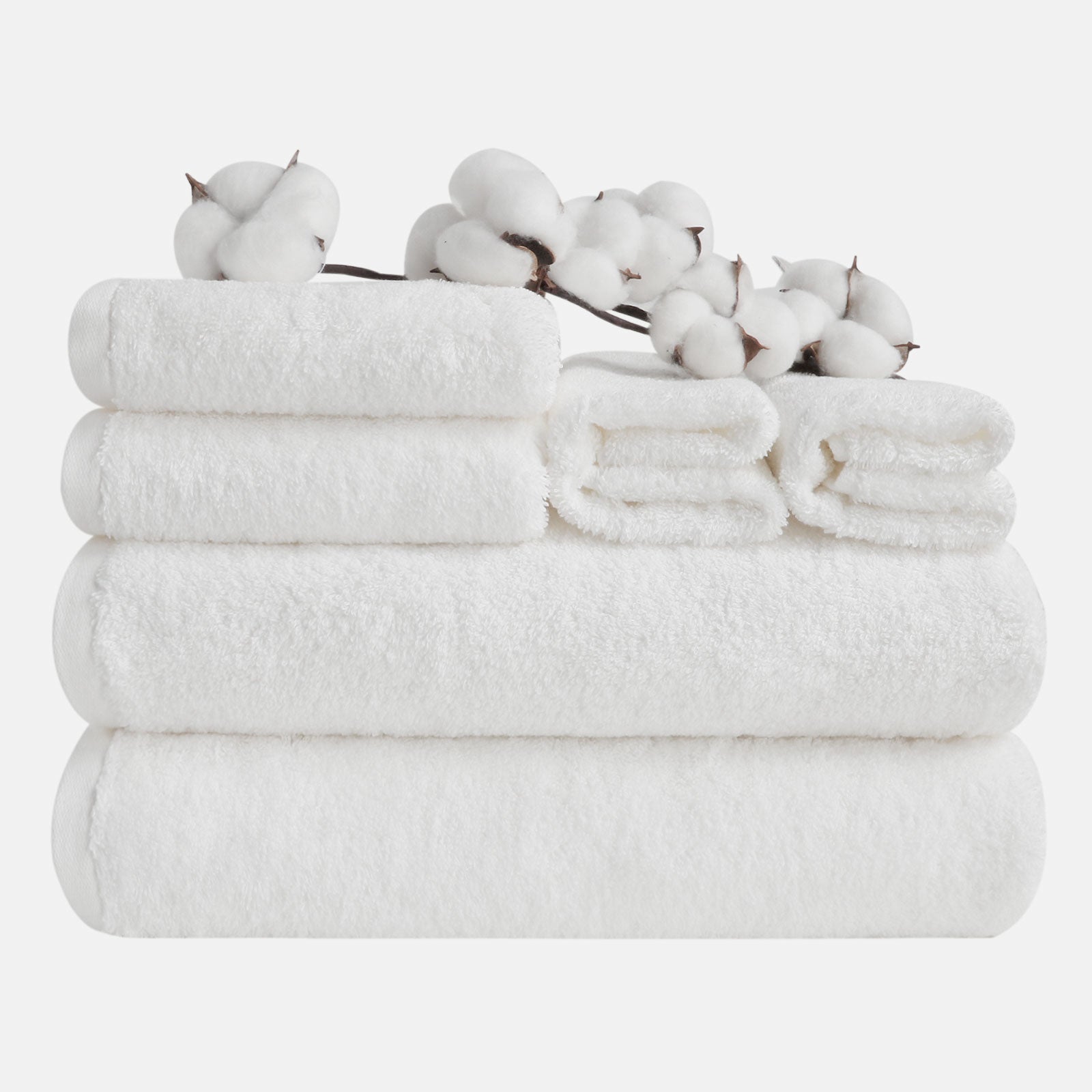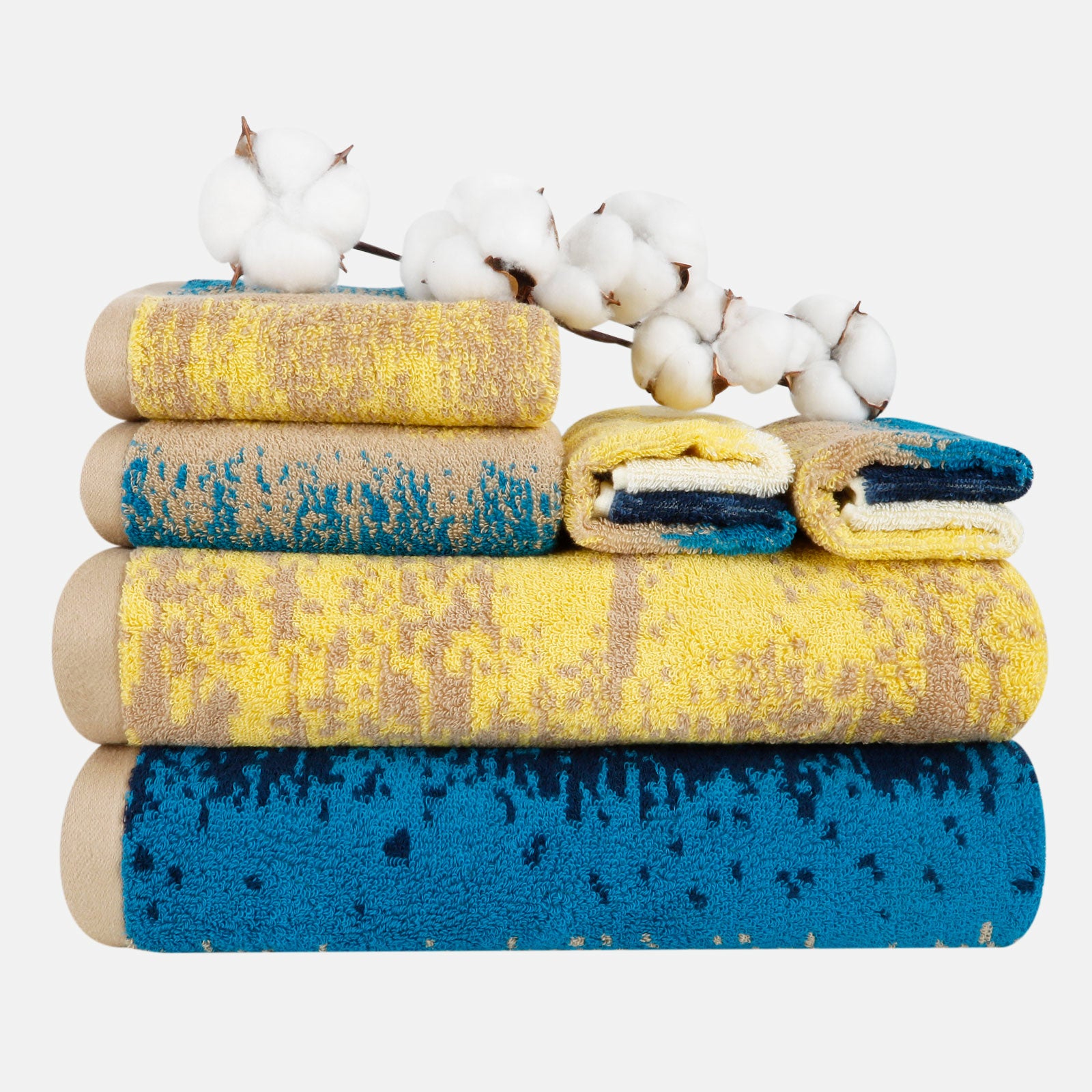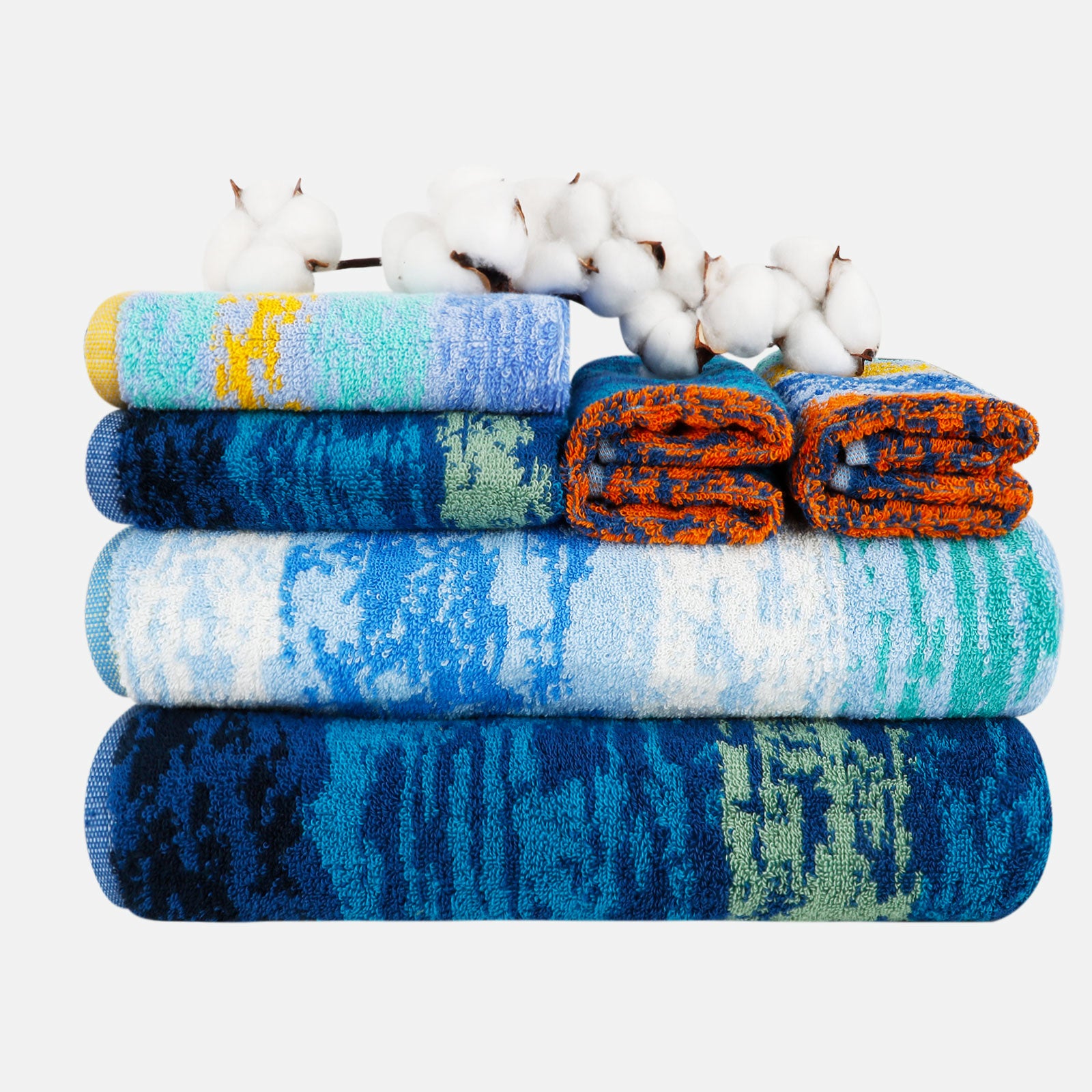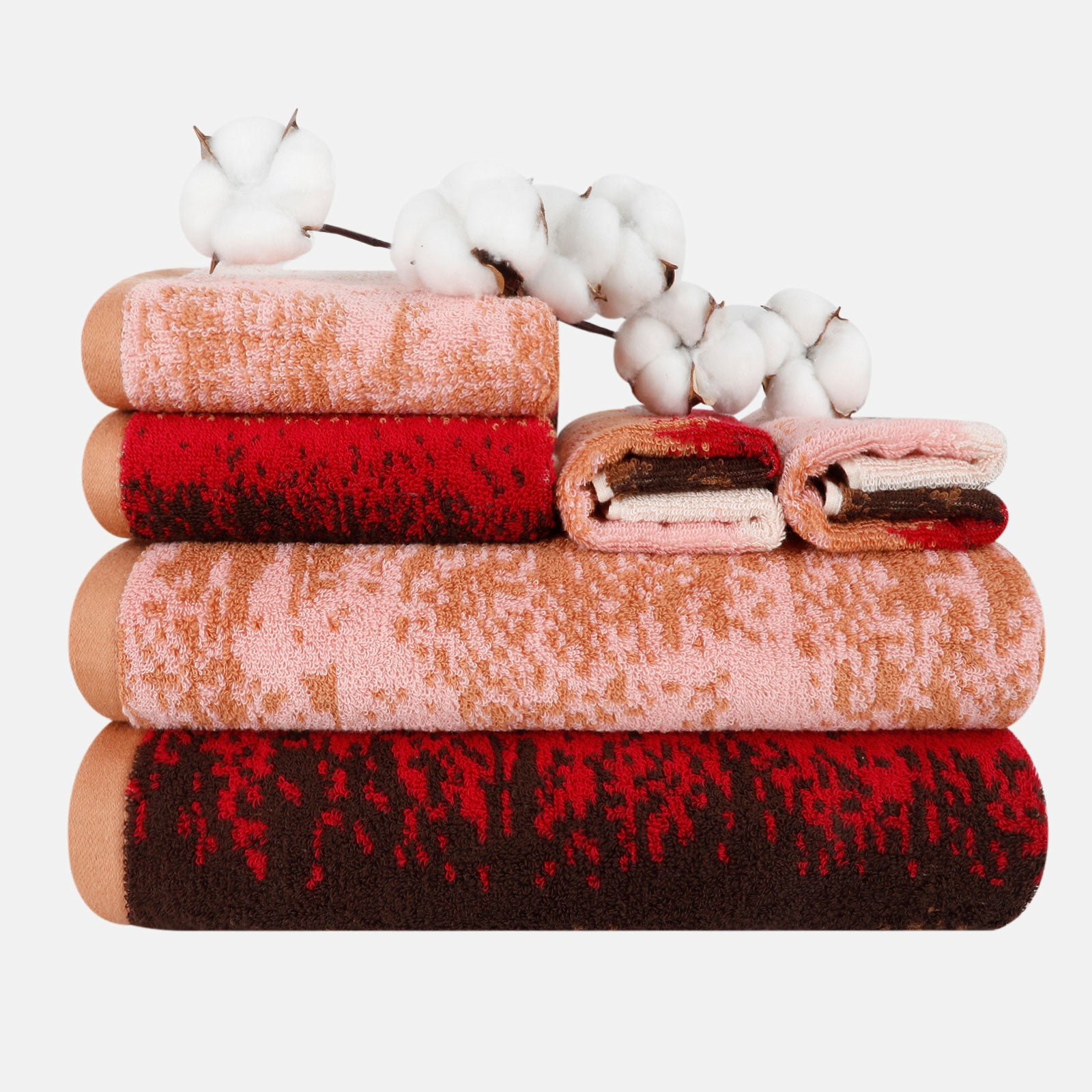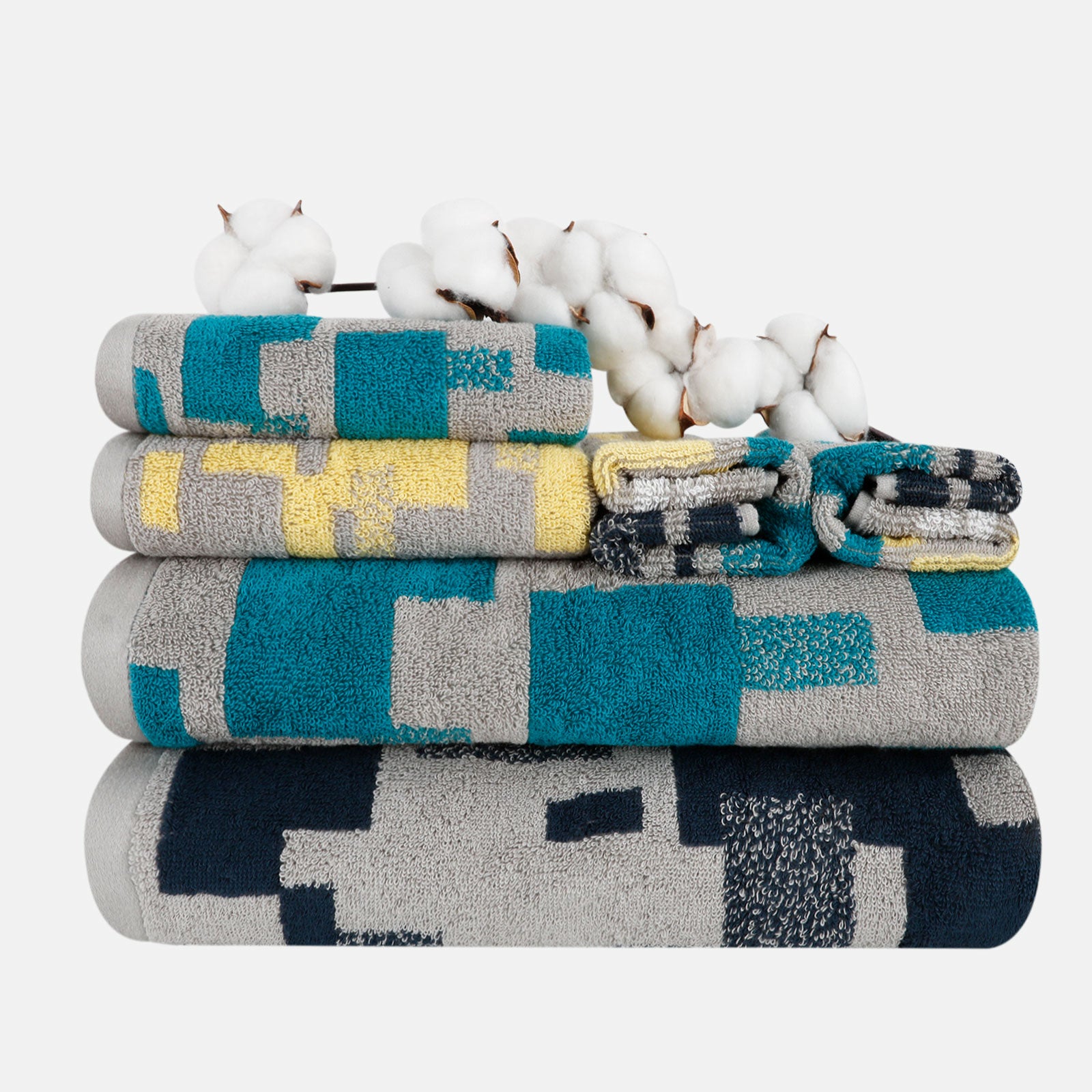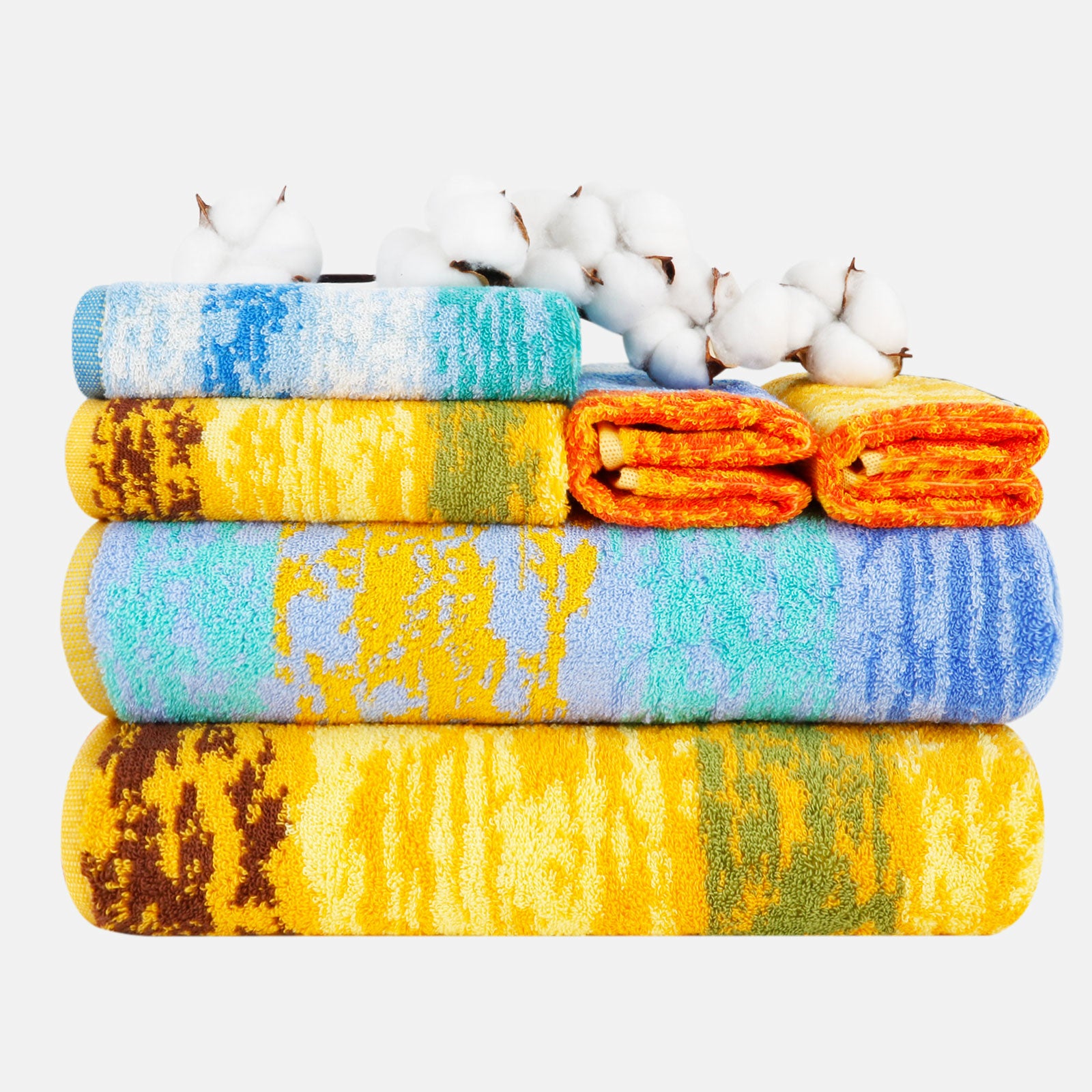
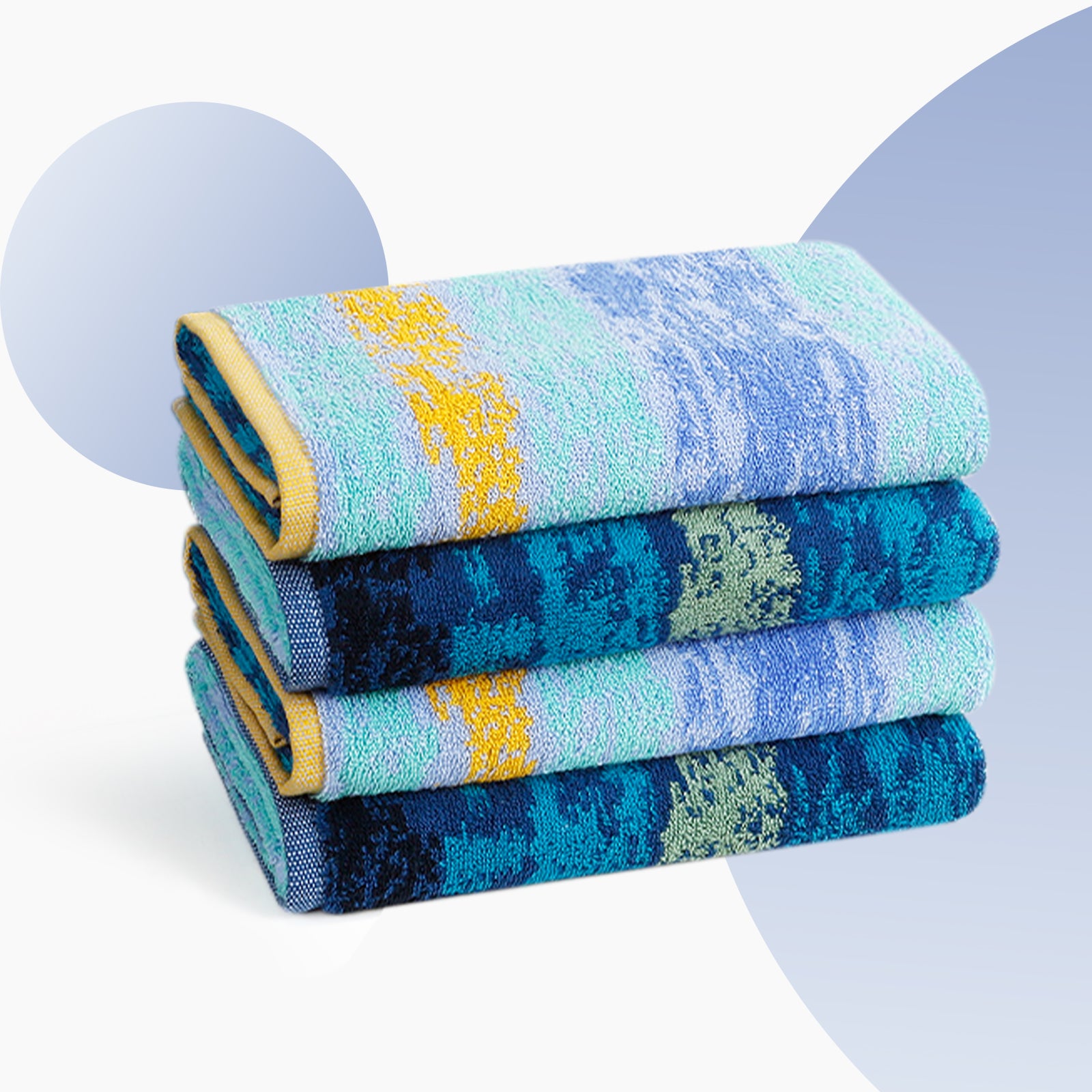
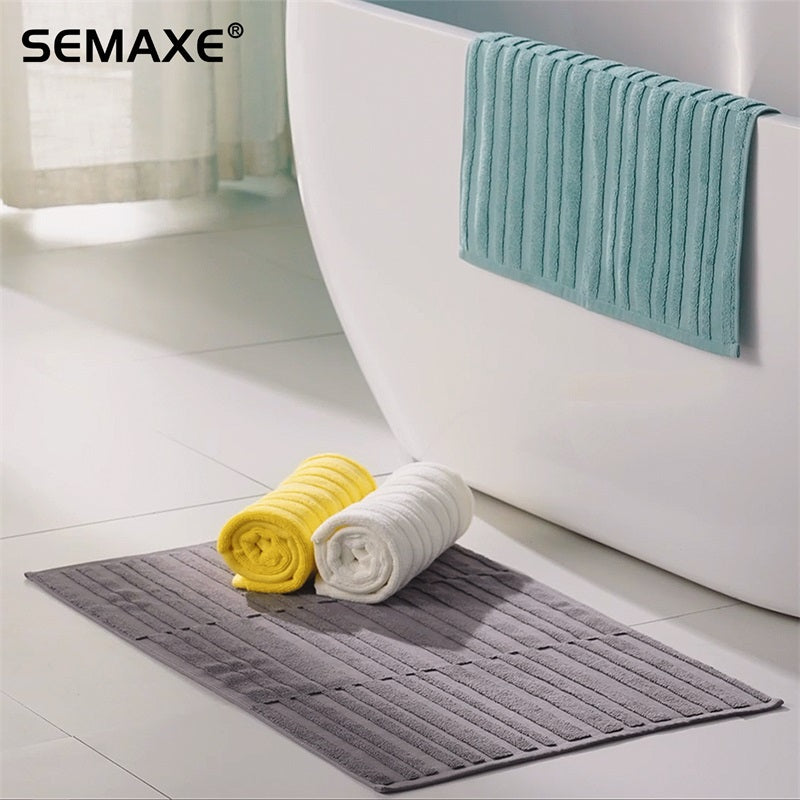

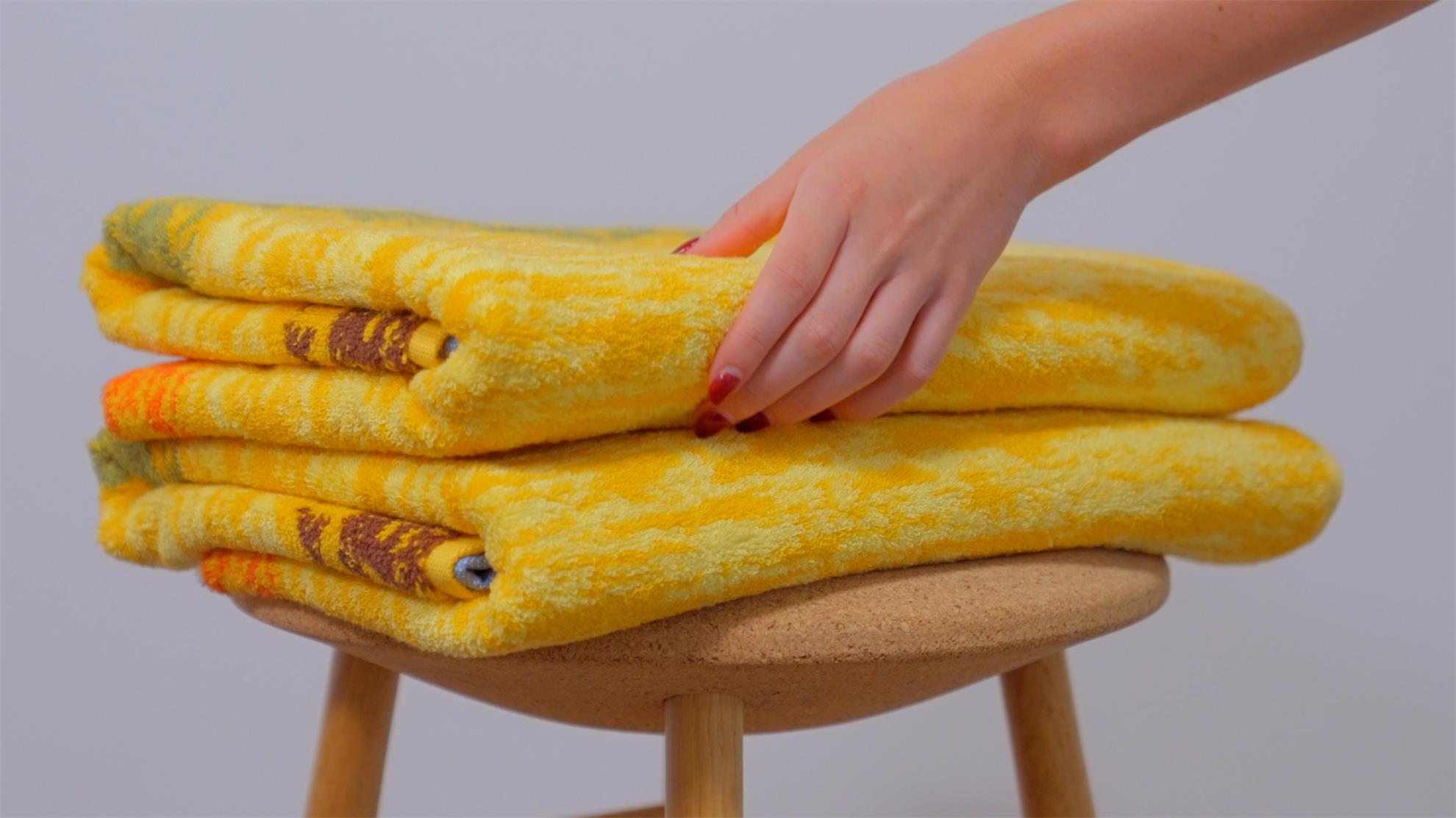


You have probably owned a towel that started shedding little threads from the edges after just a few weeks. Soon, the hem comes loose, and the towel looks shabby. That is a sign of weak stitching – usually a simple hemmed edge that cannot withstand tumbling. SEMAXE solves this with overlock stitching.
What Is Overlock Stitching?
Overlock (also called “serger”) stitching wraps multiple threads around the raw edge of the fabric and cuts off the excess. Unlike a single‑needle hem, overlock creates a flexible, stretch‑resistant edge that does not unravel. It is the same stitching used on high‑end activewear and outdoor gear – because durability matters.
Why Overlock Stitching on Towels?
Bath towels go through a lot: aggressive washing, high‑speed spinning, hot dryers, and constant folding. A plain hem often frays at the corners first. Overlock stitching distributes stress evenly. The result: no loose threads, no unraveling edges. SEMAXE’s 🛡️ Durable promise means your towel edges remain intact wash after wash.
How to Spot Quality Stitching
When shopping for a durable towel, turn the edge over. You should see a dense row of zigzag threads, not a single line of straight stitches. Pull gently – the edge should feel firm, not loose. SEMAXE uses heavy‑duty overlock with a four‑thread safety stitch on every bath towel, hand towel, and washcloth.
Beyond Stitching – Other Durability Factors
-
Combed long‑staple cotton: Fewer weak points in the yarn.
-
550GSM density: Not too thin (which tears easily) nor too thick (which strains seams).
-
Fade‑resistant dyes: Won’t degrade the fibers.
Combine these with overlock stitching, and you have a machine washable towel that survives hundreds of cycles.
Care to Extend Durability
Even an overlock‑stitched towel benefits from gentle care: avoid high heat, skip bleach, and do not overload the dryer. Rotate between two sets to give each towel rest. With SEMAXE’s construction, your bath towel set will still look presentable when it is time to replace it for hygiene reasons (around 3‑4 months).