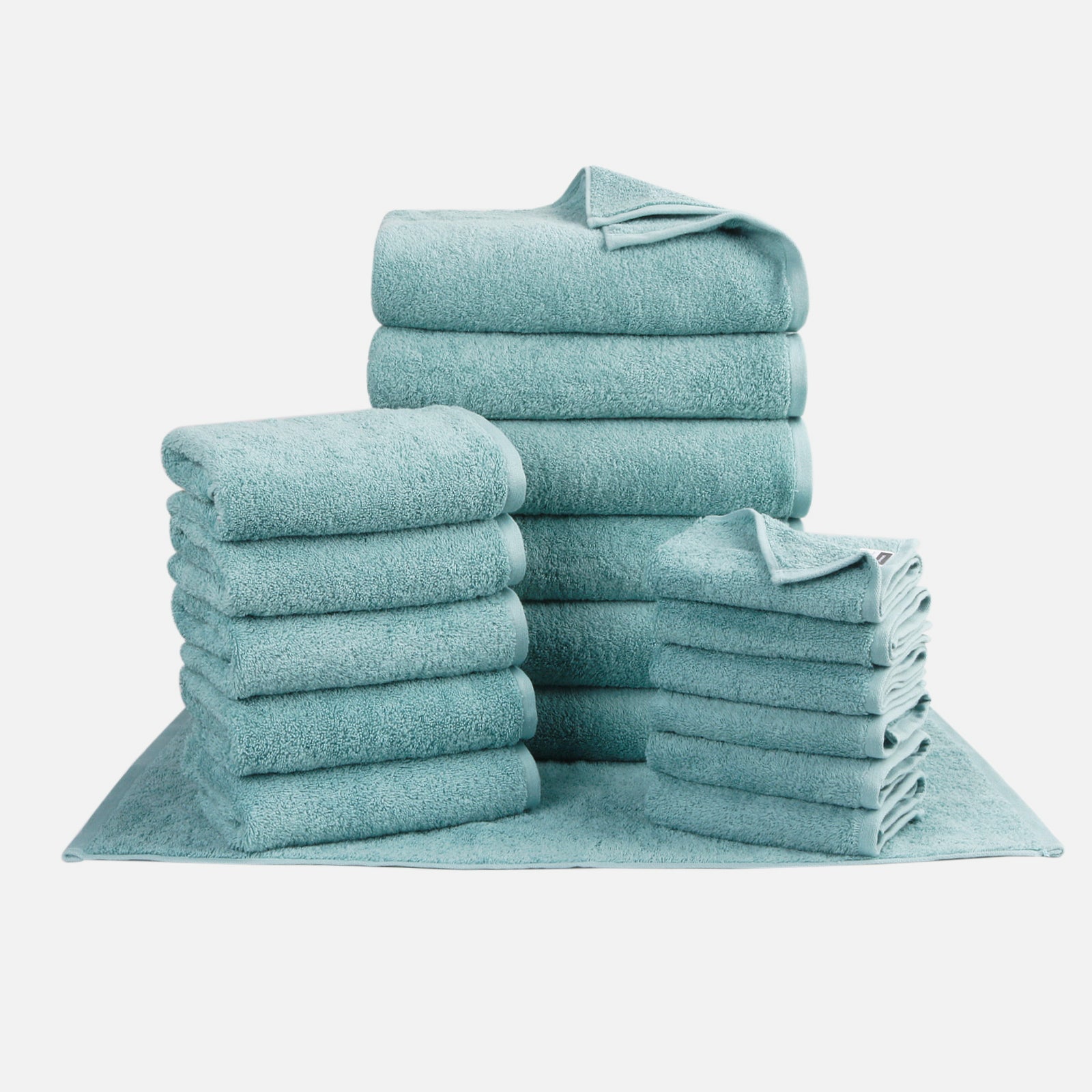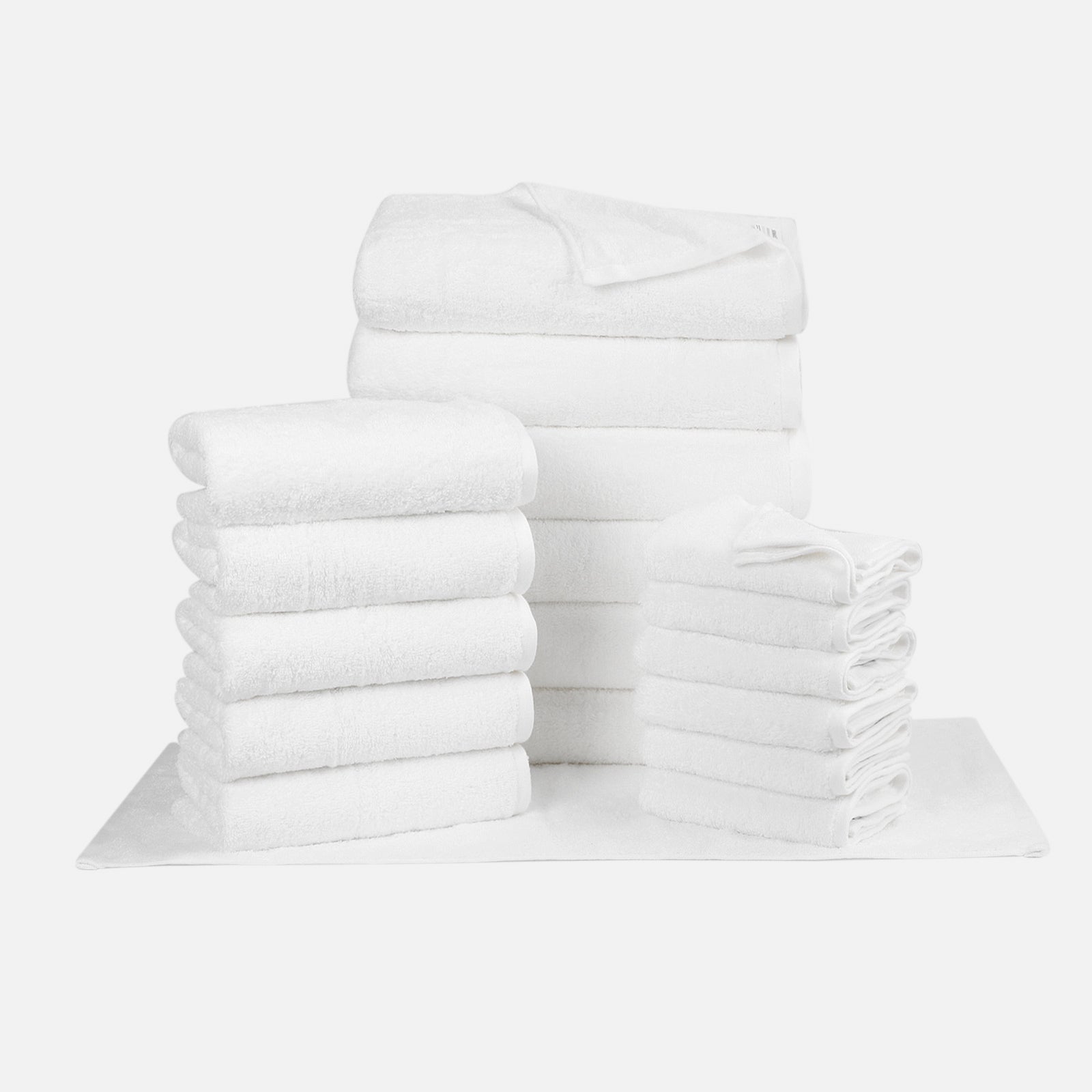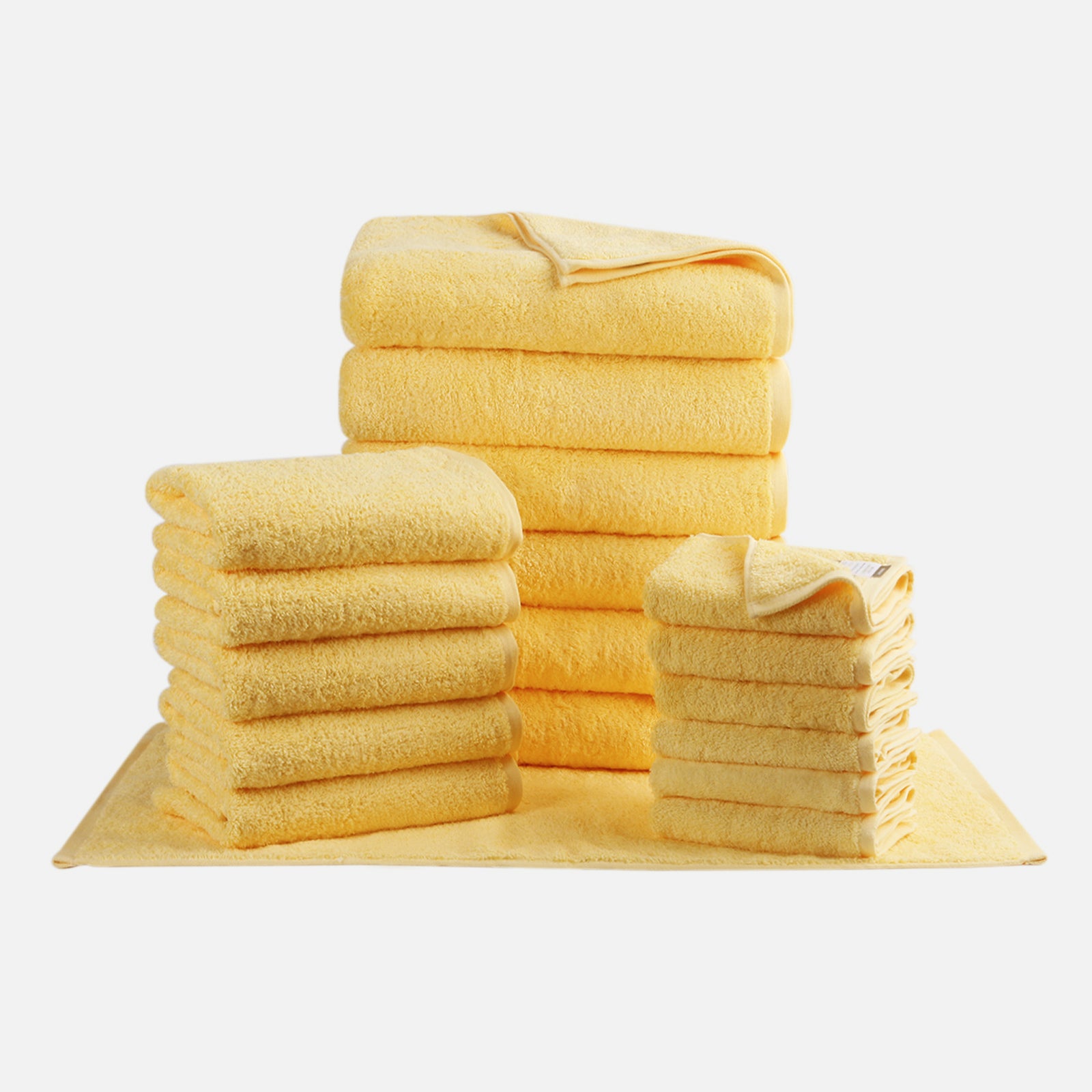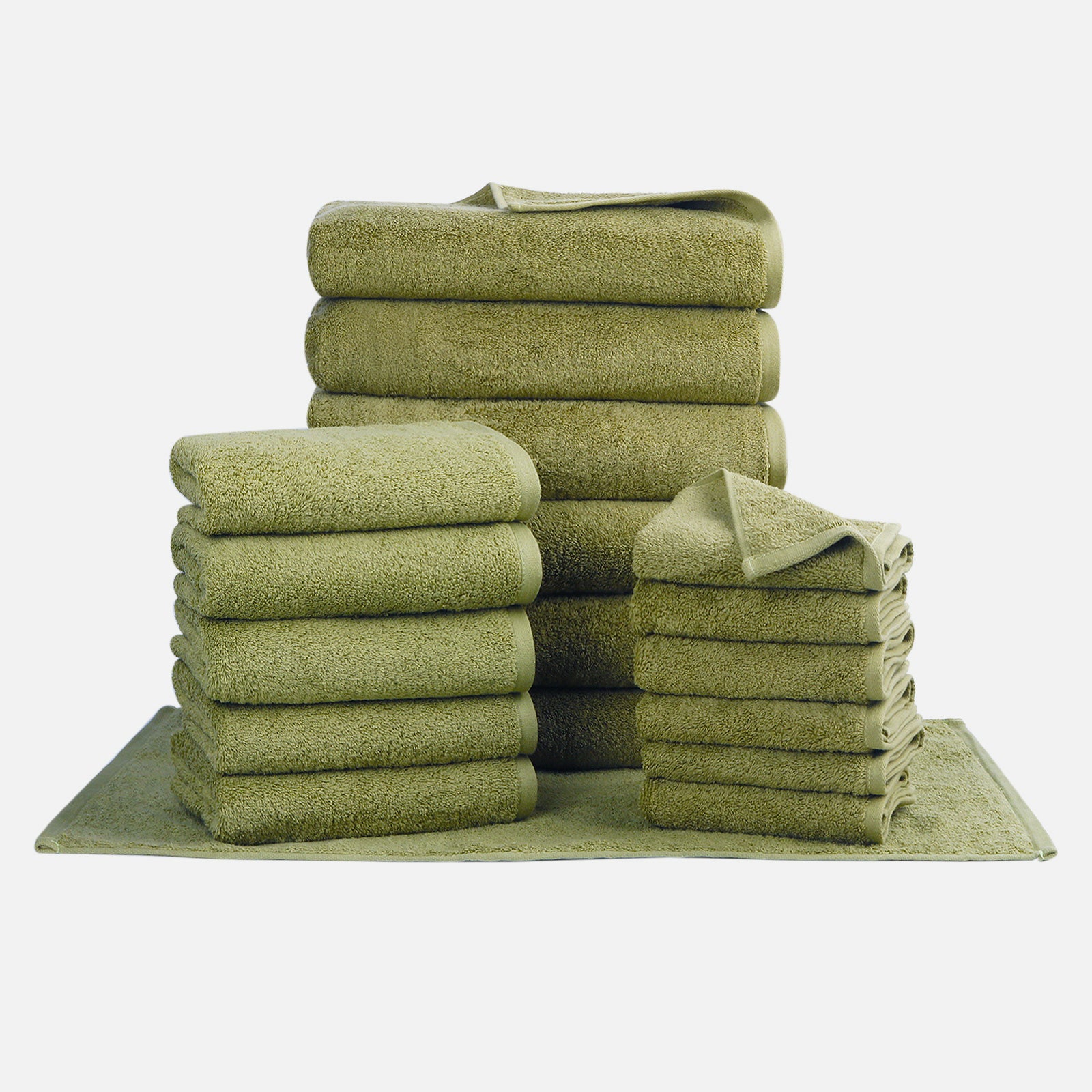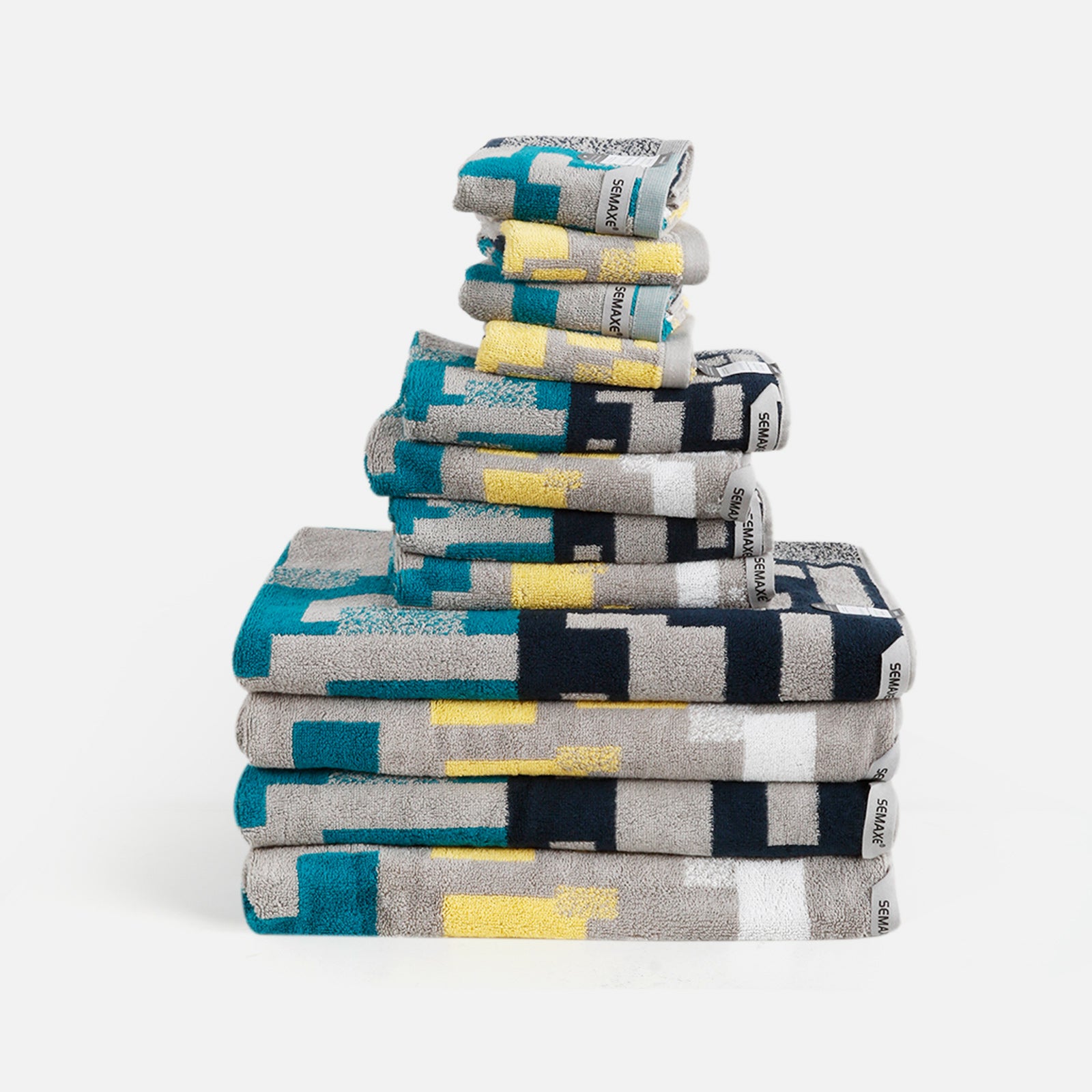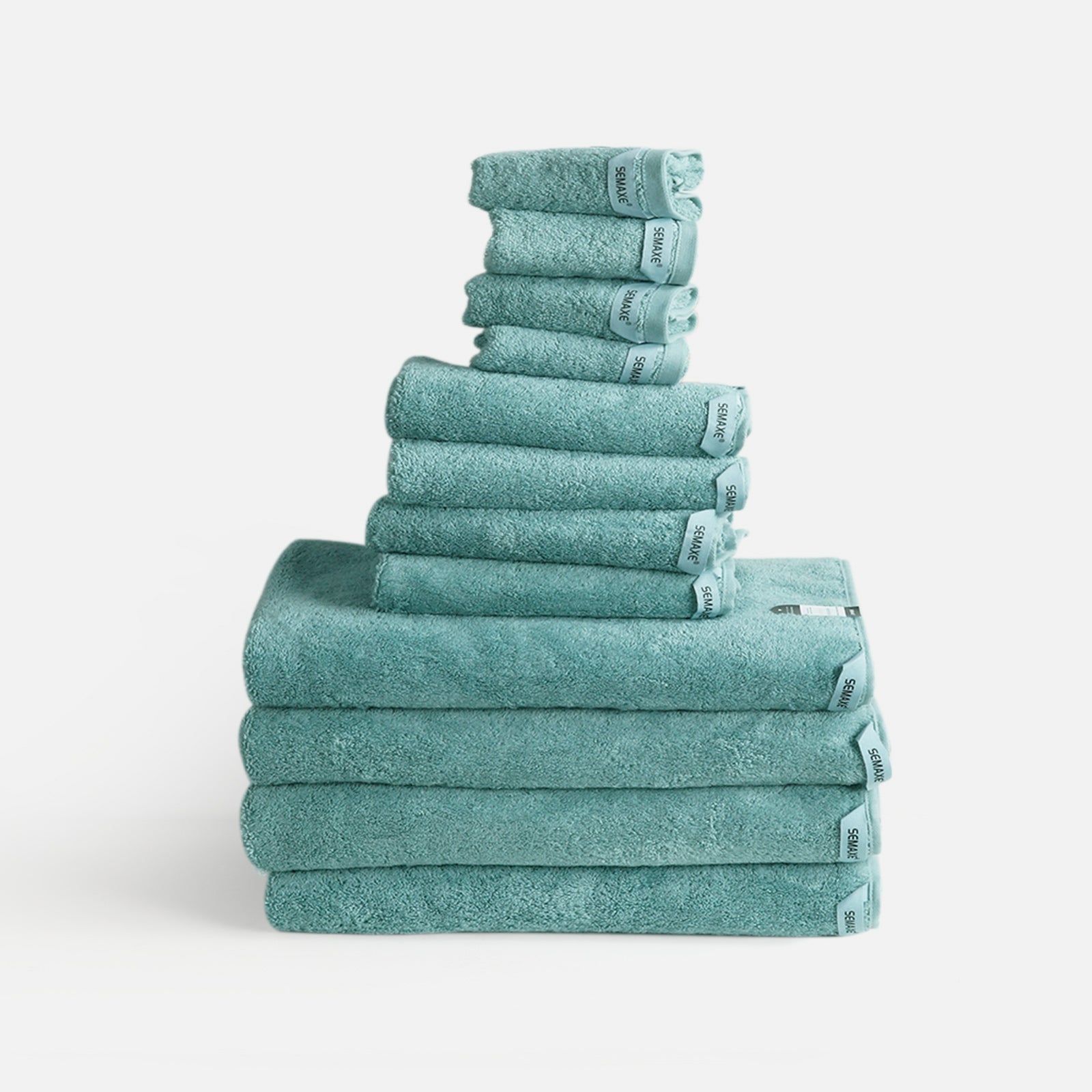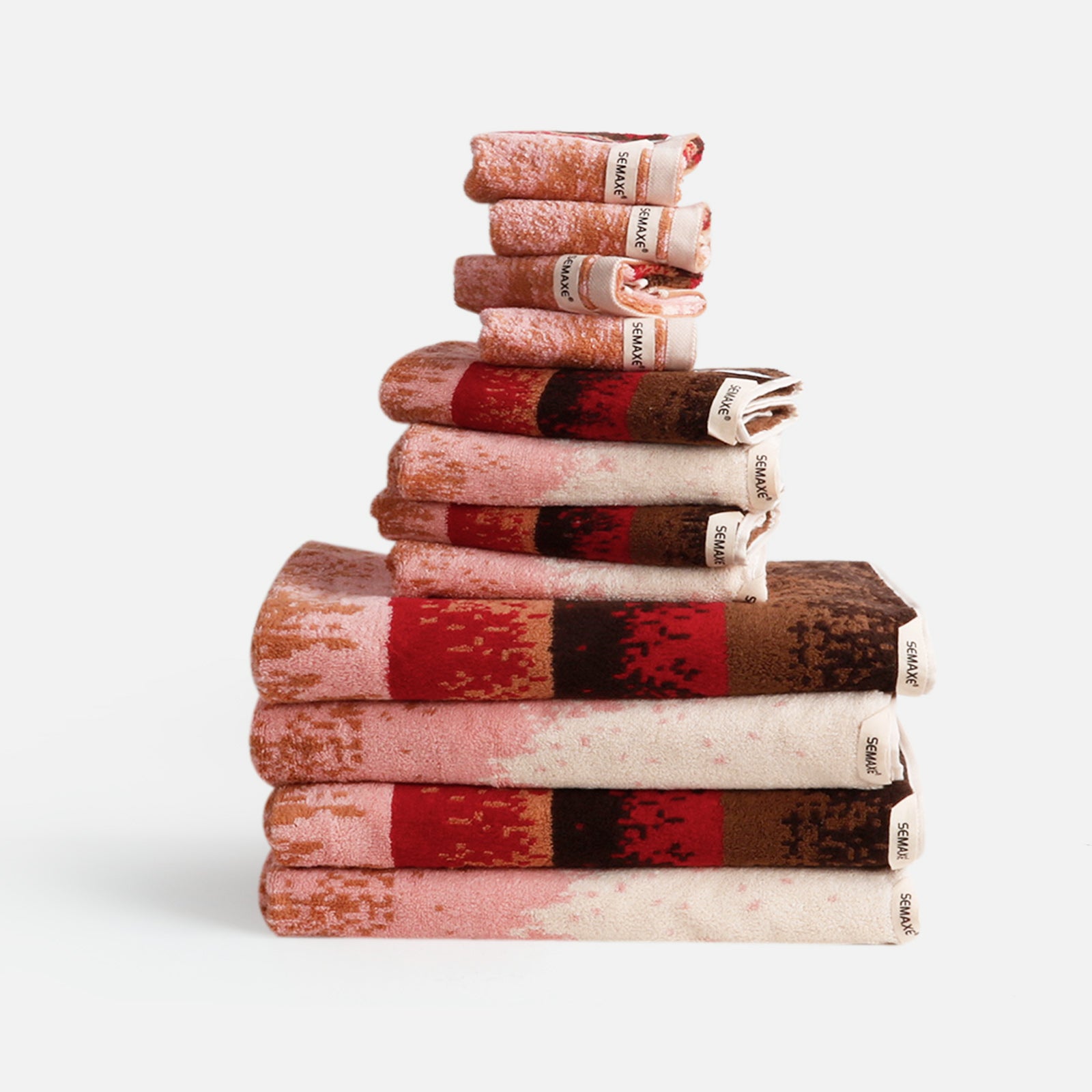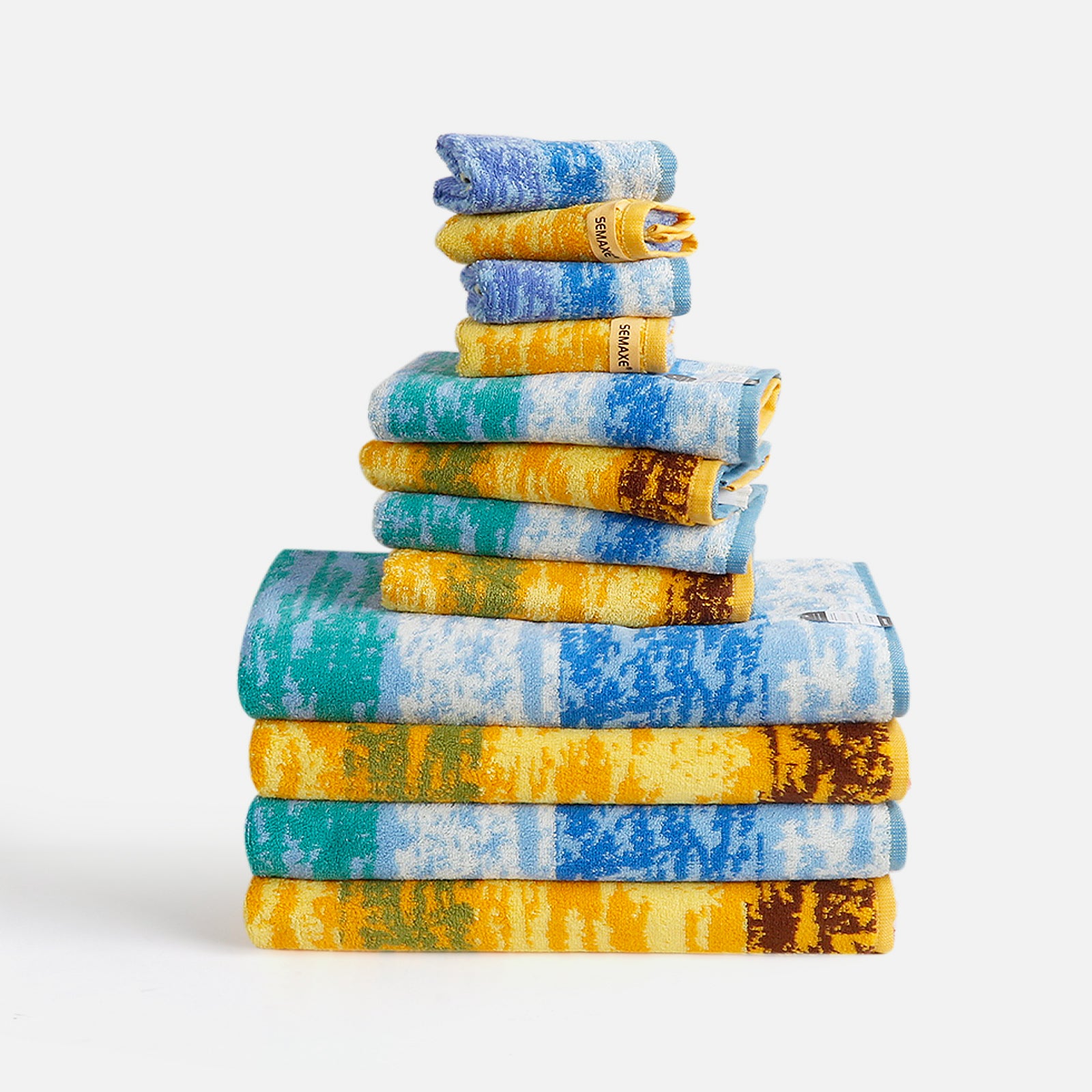

You have washed your towels. Now comes the next big decision: how to dry them.
Both tumble drying and air drying have their advantages and drawbacks. The right choice depends on your priorities — fluffiness, energy savings, fabric longevity, or convenience.
Tumble drying — the fluffiness champion
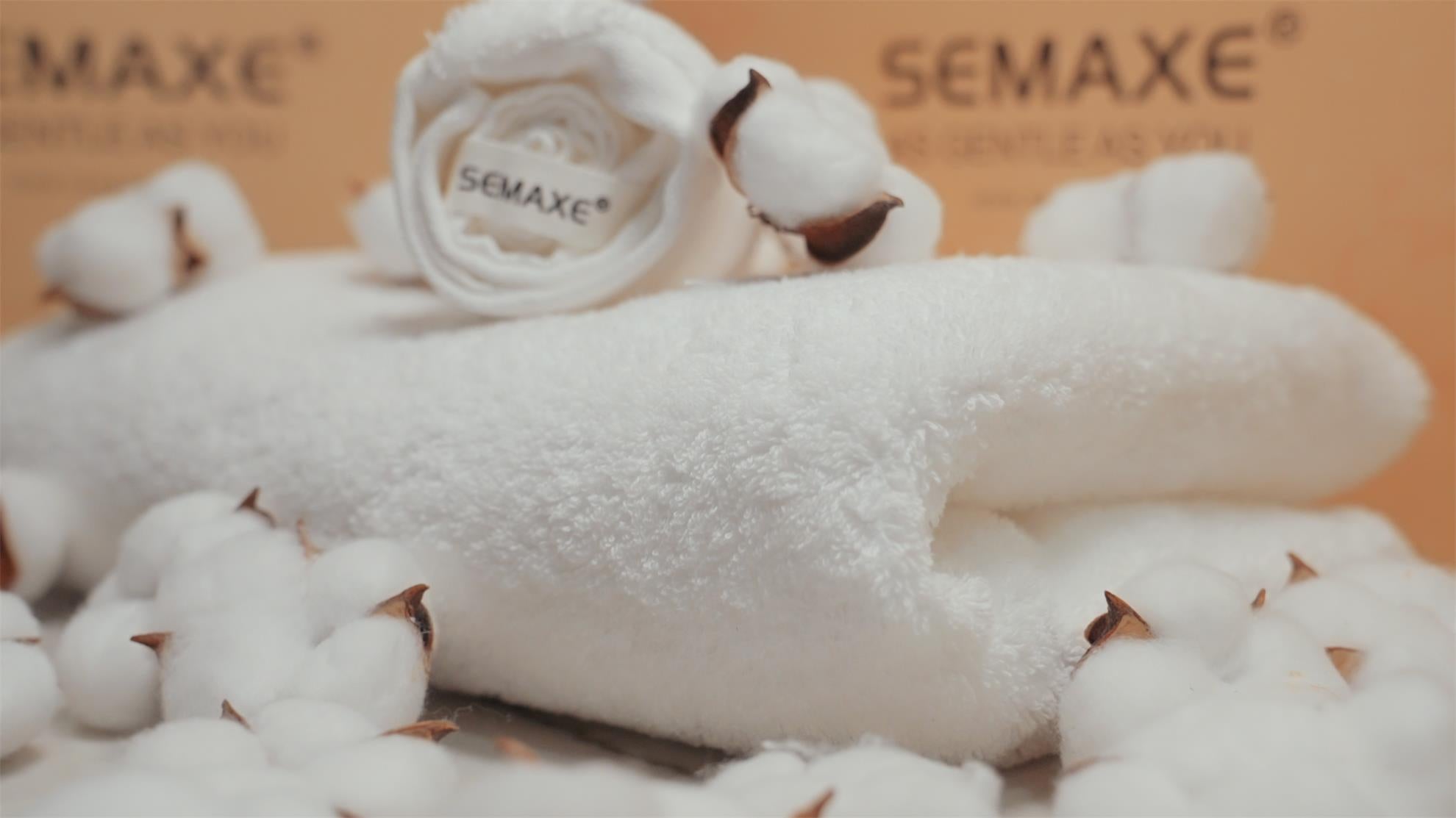
A tumble dryer on a low to medium heat setting is widely considered the best way to achieve soft, fluffy towels. The tumbling action lifts the loops in the terry cloth, giving towels that plush, voluminous feel you get from luxury hotels.
Best practices for tumble drying:
-
Use low or medium heat: High heat is one of the biggest enemies of towel longevity. Excessive temperatures can shrink cotton fibers, make them brittle, and cause the fabric to lose its softness over time.
-
Remove promptly: Take towels out of the dryer as soon as the cycle finishes. Leaving them sitting in a warm, stagnant drum can lead to wrinkling.
-
Use wool dryer balls: Tossing in a couple of wool dryer balls helps separate the towels, improves air circulation, and naturally fluffs the fibers.
-
Don't overdry: Over-drying breaks down cotton fibers and can make towels feel harsh. If your dryer has a moisture sensor, use it.
Air drying — gentle and energy-free
Line drying outdoors or hanging towels on a drying rack indoors has distinct advantages. Fresh air and sunshine are natural disinfectants — sunlight helps kill bacteria and leaves towels with a lovely fresh scent. Air drying also consumes zero electricity.
Best practices for air drying:
-
Shake before hanging: Give each towel a vigorous shake before hanging it up. This simple action helps separate the fibers and prevents them from drying in stiff, matted clumps.
-
Choose the right location: Hang towels in a well-ventilated area. Outdoors on a breezy day is ideal.
-
Mid-dry shake: For even better results, shake the towels again halfway through the drying process.
-
Dry in a shaded spot: Avoid direct, harsh sunlight which can fade colors over time.
The trade-off
Air-dried towels often feel slightly stiffer than tumble-dried ones because the fibers have not been mechanically agitated during drying. The good news is that you can fix this with a simple trick: once the towels are completely dry, toss them in the dryer on low heat for 10 minutes with a couple of dryer balls.
What to avoid: radiator drying
Draping wet towels over a radiator might seem convenient, but it is actually one of the worst drying methods for towel quality. The concentrated, direct heat bakes the fibers flat and hard, making towels stiff and crunchy.
The expert shake technique
Experts recommend shaking your towels before drying to keep loops fluffy. Shaking your towels before and after hanging them mimics the effects of the dryer, even if one is not accessible, and helps to ensure fibers are not stuck together. "You're basically waking the fluff up before it sets in place," says cleaning expert Elizabeth Shields.
How to keep towels fluffy when air drying
According to cleaning experts:
-
Use white vinegar instead of fabric softener
-
Shake towels to fluff fibers
-
Use minimal detergent to avoid stiffness
-
Dry in a breezy, shaded spot
-
Hang towels loosely for better airflow

SEMAXE's recommendation
For the perfect balance of fluffiness and fabric care, SEMAXE recommends drying on low heat when possible, using dryer balls to enhance loft. If you prefer air drying, a shake-before-and-after routine followed by a short low-heat fluff cycle will deliver exceptional results.
Key Takeaways:
-
Tumble drying on low heat produces the fluffiest towels
-
High heat damages cotton fibers and reduces softness
-
Air drying is gentle and energy-free but may produce stiffer results
-
Shake towels thoroughly before and after air drying
-
A 10-minute low-heat fluff cycle after air drying restores softness
-
Never dry towels on radiators
-
Always let towels dry completely between uses to prevent odors