
Meta Description: GSM, fiber length, weave type — towel specifications can be confusing. Learn how to decode them and choose bath towels you'll love for years.
Content:
Not all towels are created equal. Walk into any home goods store or browse online, and you'll find towels at dramatically different price points promising dramatically different quality levels. But how can you tell which towels are truly well-made and which just look the part? This guide demystifies the key specifications that determine towel quality — from GSM and fiber length to weave construction — so you can shop with confidence.
Understanding GSM (Grams Per Square Meter)
GSM is the most commonly cited towel specification — and for good reason. It measures the density of the fabric, specifically how many grams of material are in one square meter. Generally, higher GSM means thicker, more absorbent, and more plush towels.
*Low GSM (300-400):* Lightweight, quick-drying, less plush. Good for guest bathrooms, gym towels, or travel.
*Medium GSM (400-600):* Good balance of absorbency and drying time. Suitable for everyday family use and offers a reasonable compromise between plushness and practicality.
*High GSM (600-900):* Very thick, highly absorbent, luxurious feel. The downside: they take longer to dry and can feel heavy. Ideal for master bathrooms where you want a spa-like experience.
*Ultra-high GSM (900+):* Extremely plush and heavy. Often found in luxury hotels, but can be impractical for home use due to very long drying times. Most home users find 600-700 GSM to be the sweet spot for everyday luxury.
Important nuance: GSM alone doesn't tell the whole story. A lower-GSM towel made from premium long-staple cotton can actually feel softer and perform better than a higher-GSM towel made from short, low-quality fibers. GSM is about density and weight, not inherent fiber quality.
The Critical Role of Fiber Length (Staple Length)
This is arguably the single most important factor in towel quality that most shoppers overlook. Cotton fibers come in different lengths, and length determines almost everything: how soft a towel feels, how strong it is, how much it sheds, and how long it lasts.
Short-staple cotton: Shorter fibers are weaker and more prone to breakage. Towels made from short-staple cotton tend to shed more lint, feel rougher, and wear out faster. Unfortunately, much of the world's conventional cotton falls into this category.
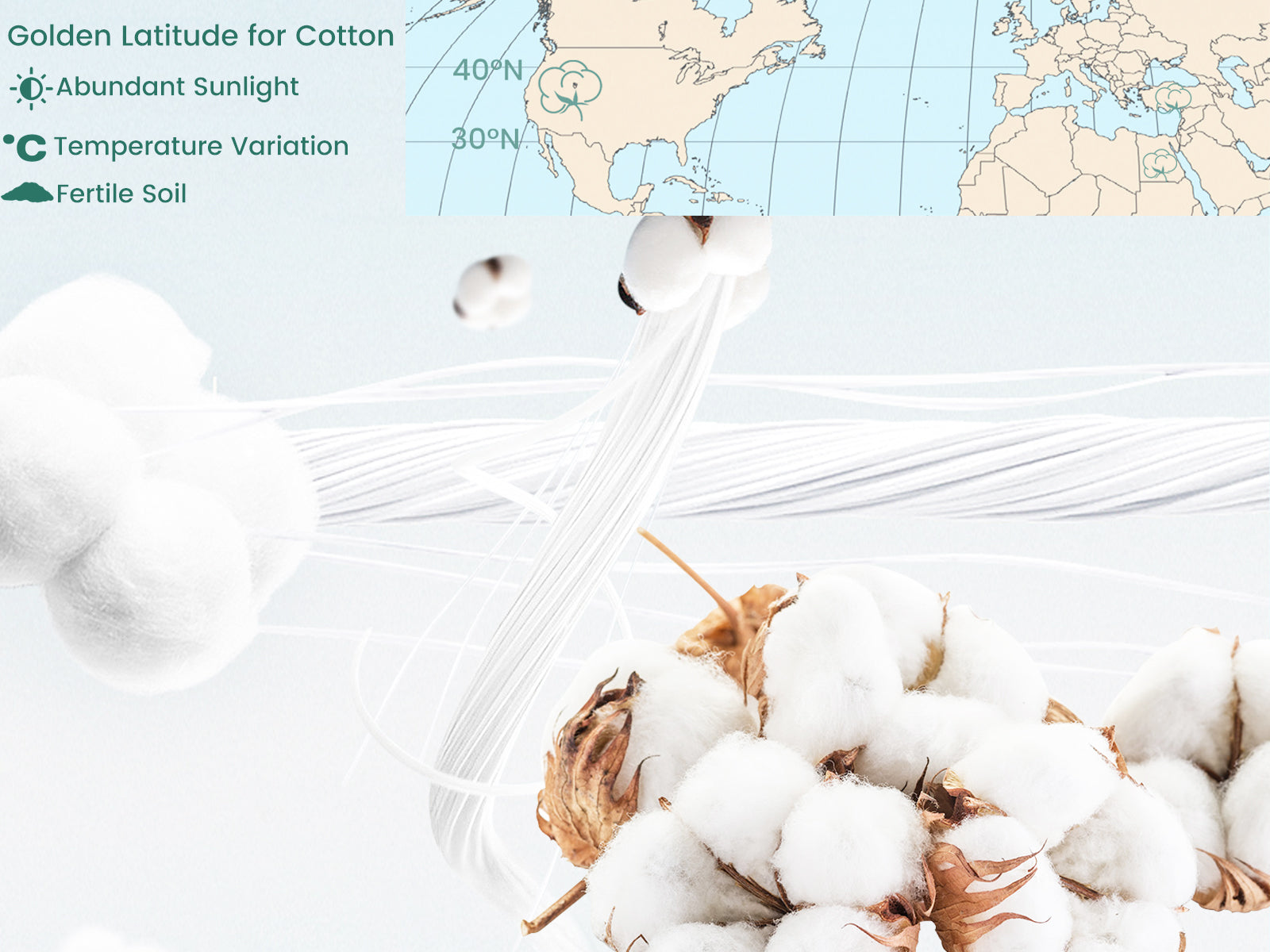
Long-staple cotton: Fibers are longer, smoother, and stronger. They can be spun into finer, more consistent yarns. Towels made from long-staple cotton feel softer, shed less, and last significantly longer. Premium cottons like Supima (American-grown) are examples of long-staple cotton.
Extra-long-staple cotton: The gold standard. These fibers — found in premium Egyptian cotton and certain Turkish cottons — are exceptionally long, lustrous, and strong. They produce towels with a silky-smooth feel, exceptional durability, and minimal shedding.
Why length matters: Think of a rope made from short pieces of string tied together versus a rope made from one continuous, long filament. The continuous rope is stronger, smoother, and less prone to fraying. Similarly, long cotton fibers produce stronger yarns that remain intact and smooth through many washes. Short fibers are more likely to break, which is why they shed lint and eventually leave bare patches.
Terry Weave and Loop Construction
The terry cloth weave is what gives bath towels their characteristic absorbent surface. Understanding how it works helps you evaluate quality:
Loop density: Closely spaced loops tend to be more absorbent and durable than loosely spaced loops. Higher loop density generally means more surface area for water absorption.
Loop height: Longer, taller loops create a plusher feel but can be more prone to snagging. Shorter, denser loops are more durable but may feel less plush. The best towels strike a balance.
Zero-twist vs. conventional: Some premium towels use zero-twist or low-twist yarns, which produce exceptionally plush, soft loops because the fibers aren't twisted tightly. These towels feel luxuriously fluffy but can be less durable if not made from high-quality long-staple cotton.
Ring-spun vs. open-end: Ring-spun cotton yarns are made by twisting fibers tightly together, producing smoother, stronger, softer yarn. Open-end yarns are made more quickly and cheaply but produce rougher, weaker yarns. All premium towels use ring-spun cotton.
Pilling Resistance
Pilling — those small balls of fiber that form on fabric surfaces — occurs when short fiber ends work their way to the surface and tangle. Towels made from long-staple cotton have fewer short fiber ends and therefore pill much less than short-staple towels. If pilling is a concern, prioritize extra-long-staple cotton and avoid towels that feel "fuzzy" in a loose, unsubstantial way.
Putting It All Together: How to Shop for Quality Towels
In-store evaluation: Run your hand across the towel. Does it feel smooth or rough? Quality cotton should feel soft without being slick. Gently pull on the loops. They should feel secure, not loose. Hold the towel up to light. You shouldn't see obvious thin spots.
Online shopping: Look for specific information about fiber type. The most transparent and trustworthy manufacturers will specify the cotton origin and sometimes even the staple length. Vague claims like "premium cotton" mean less than specific claims like "100% long-staple Turkish cotton."
Read reviews carefully: Look for mentions of durability over time, not just initial impressions. Reviews from customers who've owned the towels for months are more valuable than unboxing impressions.
Why SEMAXE's Quality Stands Out
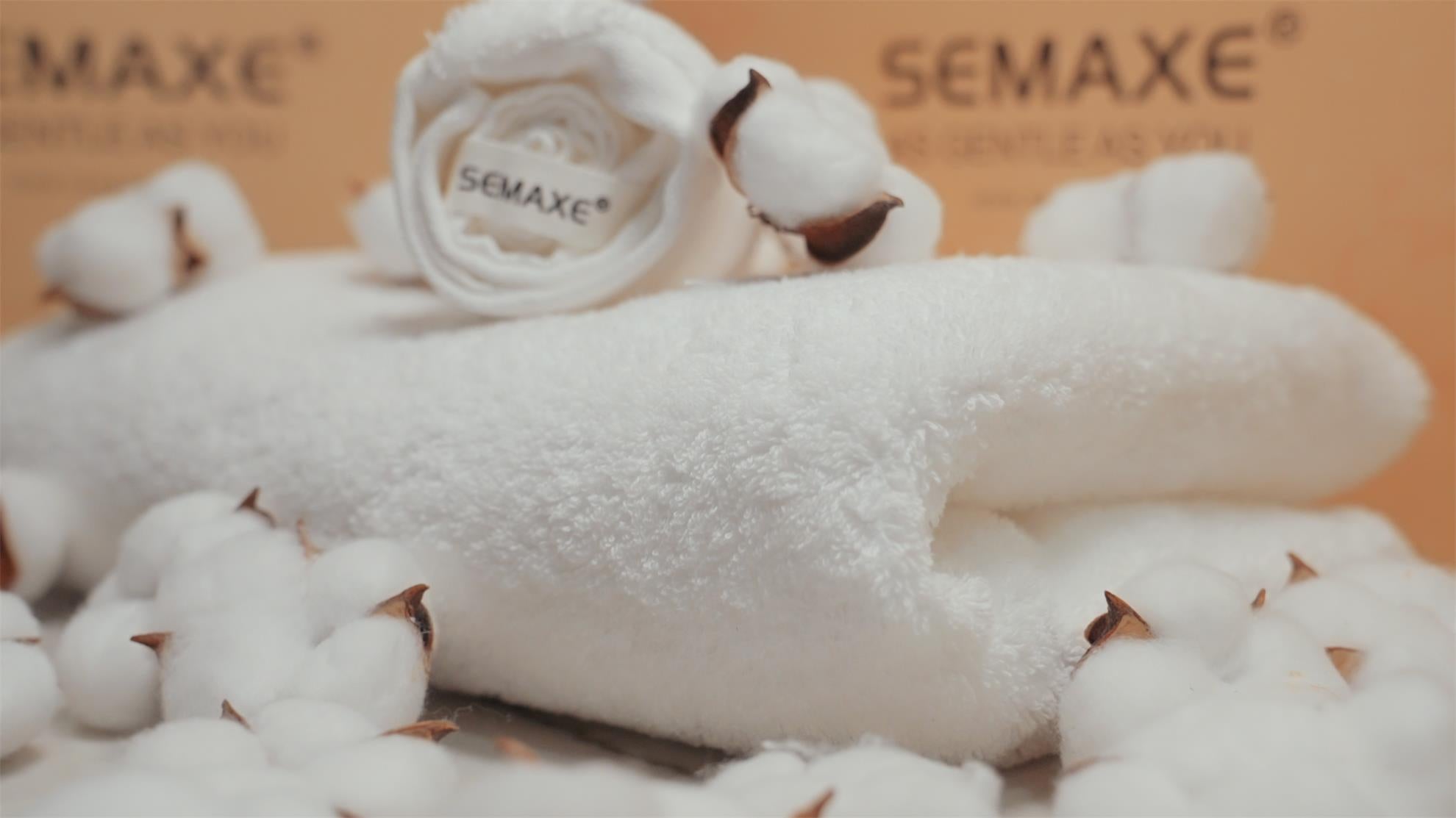
SEMAXE towels are crafted from 100% natural cotton selected for its quality and consistency. While we focus on delivering exceptional comfort and durability, we encourage customers to understand these specifications so they can appreciate what makes a well-made towel — and recognize quality when they see it.
Key Takeaways:
-
GSM measures density — higher means thicker, but doesn't guarantee fiber quality
-
Fiber length (staple length) is the most important determinant of towel quality
-
Long-staple cotton sheds less, feels softer, and lasts longer than short-staple
-
Extra-long-staple cotton (Egyptian, Supima) represents the gold standard
-
High loop density and ring-spun construction indicate better quality
-
Quality towels should feel smooth, not rough or slick
-
Look for specific fiber information — vague claims mean less